Ferret-Badger in Bangladesh
One of the least understood mammals in Bangladesh, the Ferret-Badger lives quietly within forest ecosystems. Rarely seen but ecologically important, it represents a hidden layer of biodiversity.
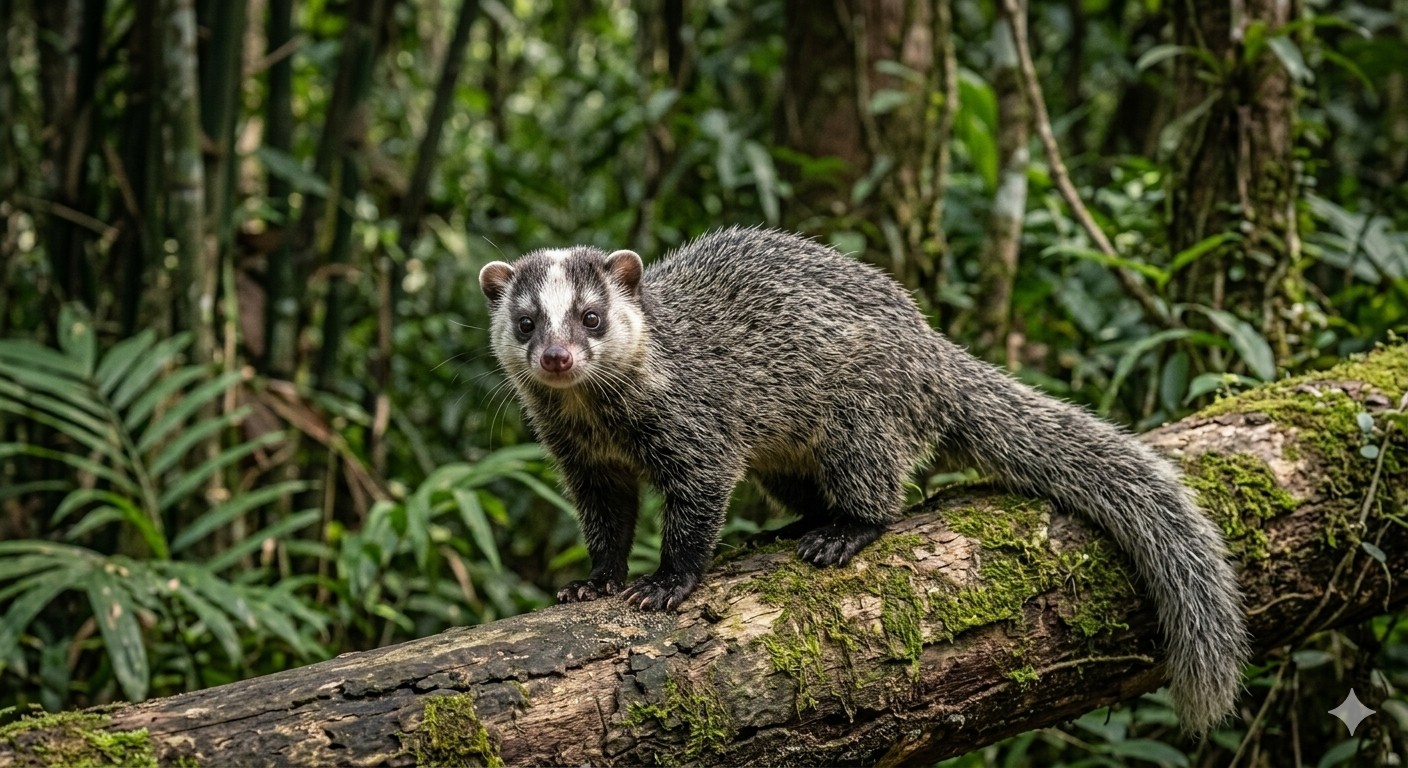
Quick Facts
Common Name
Burmese Ferret-Badger
Scientific Name
Melogale personata
Family
Mustelidae
Status
Least Concern (data limited)
Habitat
Forest floor, dense vegetation
Activity
Nocturnal
Diet
Insects, small animals, fruit
Bangladesh Region
Sylhet & Chittagong Hill Tracts
Key Insights
- The Burmese Ferret-Badger is one of the least studied mammals in Bangladesh.
- Confirmed records exist from Patharia Hill Reserve Forest.
- It is a nocturnal forest-floor predator with a highly flexible diet.
- Habitat loss and hunting threaten long-term survival.
- Lack of data is the biggest challenge for conservation.
Latest Bangladesh Evidence
2024 Bangladesh confirmation
Recent scientific observations confirmed the presence of Ferret-Badgers in Patharia Hill Reserve Forest in northeastern Bangladesh.
Rare but present
The species is not frequently recorded, but evidence suggests it persists in suitable forest habitats.
Camera-trap importance
Modern wildlife surveys using camera traps are beginning to reveal hidden species like the Ferret-Badger.
Data gap
Despite confirmed presence, population size and distribution remain largely unknown.
Ecological Niche
Nocturnal insectivore-omnivore
Feeds heavily on insects, worms, snails, and small vertebrates, helping regulate forest floor ecosystems.
Forest floor specialist
Operates mainly on the ground, using dense vegetation and burrows for shelter.
Opportunistic feeder
Consumes fruit, eggs, carrion, and small animals, making it adaptable to changing environments.
Hidden ecological role
Supports ecosystem balance through pest control and food web connections.
Research Gaps & Knowledge Limitations in Bangladesh
The current understanding of the Burmese Ferret-badger in Bangladesh is extremely limited and based on only a handful of confirmed records. This highlights major scientific and conservation gaps that must be addressed to properly protect the species and its habitat.
Taxonomy & Identification
- • Difficult to distinguish from similar species without genetic testing
- • No confirmed presence of other Melogale species in Bangladesh
- • Subspecies classification remains unverified
Distribution & Habitat
- • Confirmed only in Patharia Hill RF and Chittagong Hill Tracts
- • Presence in other forests remains unknown
- • No data on habitat preference or fragmentation impact
Population Status
- • No population estimates exist
- • Abundance and density are unknown
- • Population trends have never been studied
Ecology & Behavior
- • No Bangladesh-specific studies on diet or activity
- • Home range and reproduction unknown
- • Social and genetic structure not studied
Threat Understanding
- • Local threats not well documented
- • Hunting and snaring impacts unclear
- • No research on disease or health risks
Conservation & Policy
- • Not listed under Bangladesh wildlife protection law
- • No national conservation assessment
- • No dedicated conservation plan
These gaps show that the Ferret-Badger is not just a rare species — it is a largely unstudied one. Without basic ecological and population data, conservation efforts cannot be properly designed or targeted.
Addressing these challenges requires systematic camera trap surveys, genetic sampling, long-term ecological research, and stronger legal recognition. Protecting its habitat is critical, but understanding the species itself is equally important.
Major Threats
Deforestation
Forest clearing removes habitat and shelter needed for survival.
Habitat fragmentation
Breaking forests into patches limits movement and increases risk.
Hunting and trapping
The species is sometimes hunted or caught unintentionally in snares.
Lack of research
Without data, conservation planning remains weak and incomplete.