An entomological awareness night in Pittachhara brought Tripura and Chakma children face-to-face with moths, light traps, and the unseen importance of insects.
A Night That Began with Light
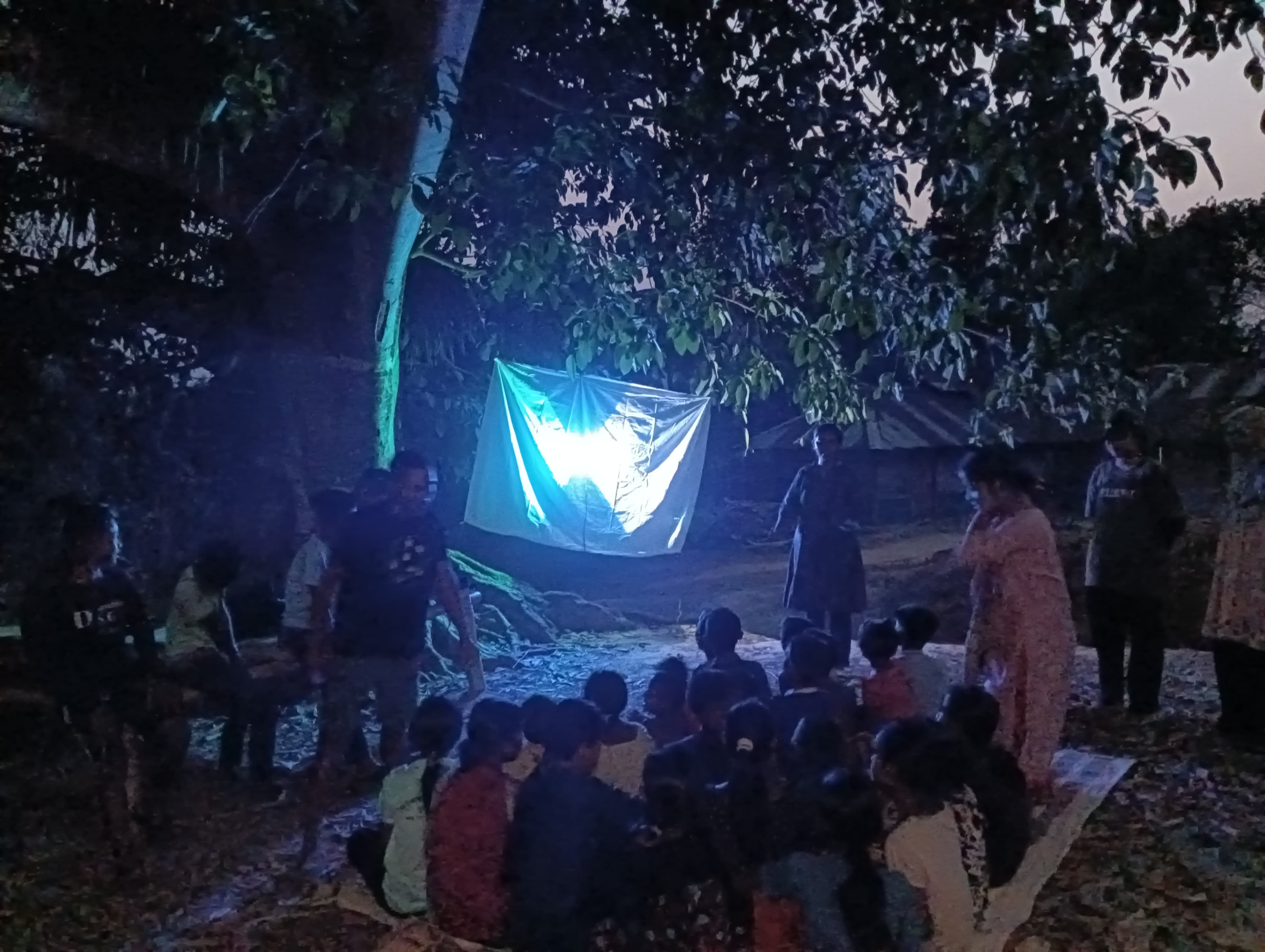
Children gathered around a light trap during an entomological awareness night near Pittachhara Forest.
On April 14, 2025, in a village near Pittachhara Forest, we gathered with children from Tripura and Chakma communities for something simple, yet powerful: an entomological awareness night.
As darkness settled, we set up a light trap under a tree. Within minutes, the glowing sheet began to attract insects from the surrounding forest. What started as curiosity quickly turned into fascination.
Curiosity Turns into Discovery
The children sat closely, watching insects arrive one by one. Moths, beetles, and other nocturnal species appeared under the light, each one becoming a subject of curiosity.
We guided them through simple explanations, showing the names of visible insects and helping them observe differences in shape, size, and color.
For many of them, it was the first time seeing these creatures not as something to fear, but as something to understand.
Learning Through Seeing
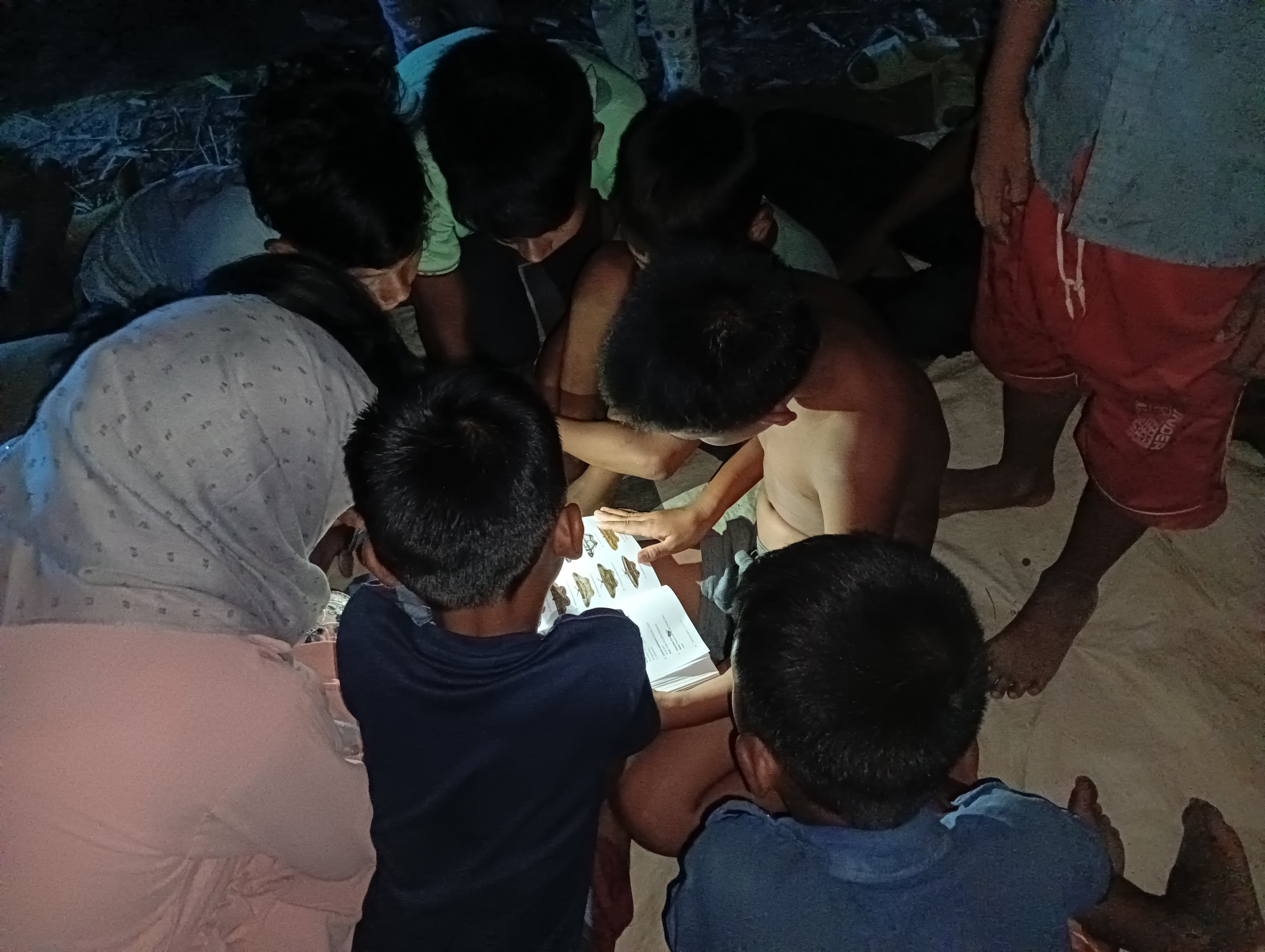
Children engaging with insect visuals and learning to identify moths during the awareness session.
Using visual materials, we showed images of different moth species and explained how to identify them. The children compared what they saw on the sheet with the images in hand.
We also explained the difference between moths and butterflies, helping them understand how these species behave, when they are active, and why they matter.
Learning was not one-sided. The children asked questions, pointed at insects, and tried to identify them themselves.
Why Insects Matter More Than We Think
We explained that insects are not just small creatures in the forest. They are essential to ecosystems.
Moths and other insects contribute to pollination, act as food sources for birds and mammals, and play a role in maintaining ecological balance.
Understanding insects is one of the first steps toward understanding biodiversity itself.
More Than a Children’s Program
Although the program was designed for children, adults from the community also joined. They stood around, observed, and listened.
This unexpected participation made the experience more meaningful. Awareness does not stay limited to one group; it spreads through shared experience.
Learning Through Interaction
To make the session more engaging, we organized a simple quiz. Using images of moths, we asked the children to identify features and recall what they had learned.
Their responses showed something important: they were not just watching, they were understanding.
Why Community Awareness Matters
Conservation is not only about research or fieldwork. It begins with awareness.
When children understand the value of insects, forests, and biodiversity, they grow into individuals who are more likely to protect them.
Programs like this create a connection between people and nature that cannot be built through theory alone.
A Quiet Impact
That night ended without any formal conclusion. The light dimmed, the insects disappeared, and people slowly returned home.
But something stayed.
A new way of seeing the forest, not just as a place, but as a living system filled with small, important lives.