On January 10, 2026, wildlife presenter Nigel Marven visited Bangladesh to document the Plumploris e.V. Slow Loris conservation project, revealing real field challenges and conservation realities.
A Rare Visit to the Field
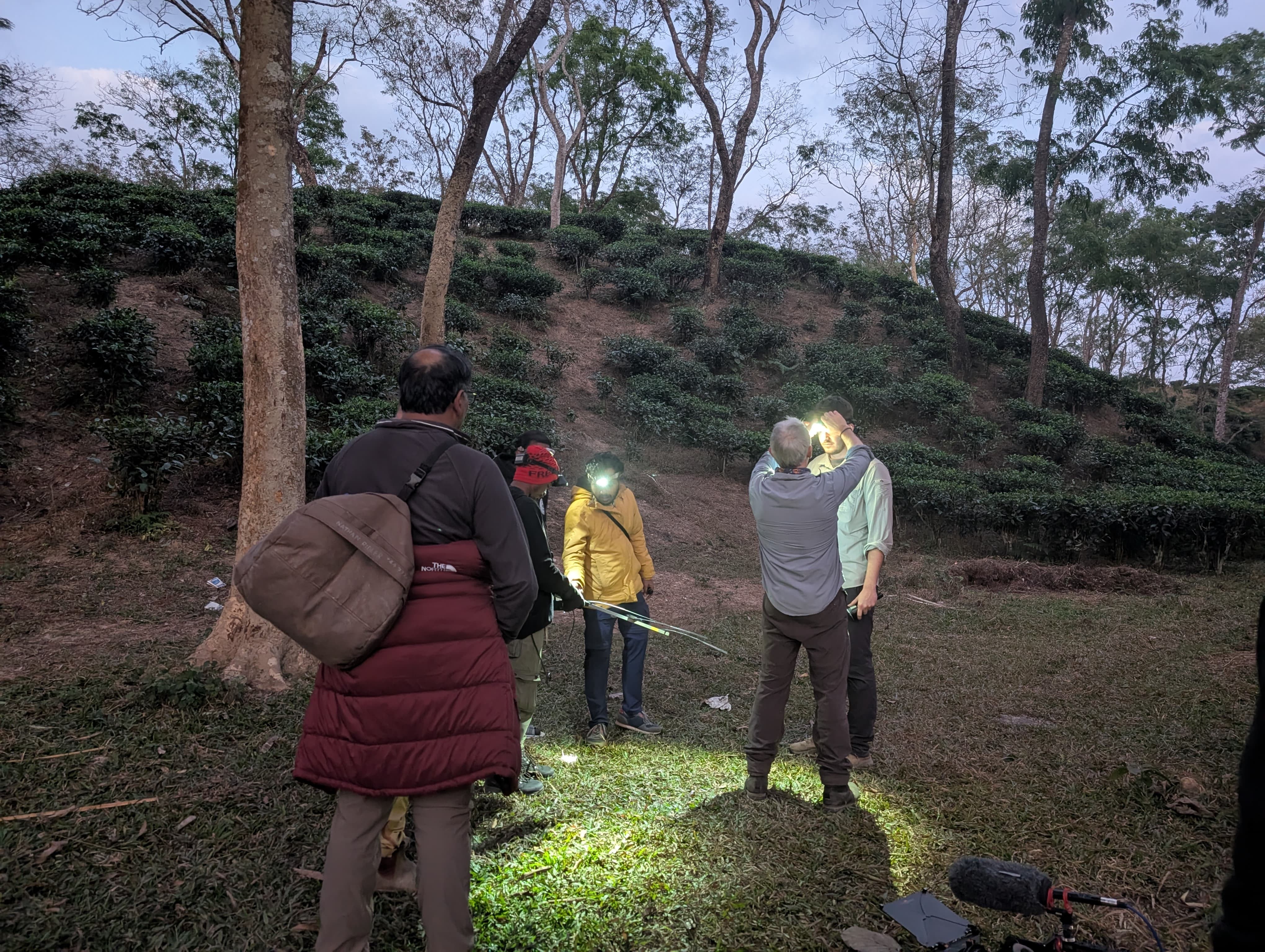
Nigel Marven documenting Slow Loris conservation work during his visit to Bangladesh.
On January 10, 2026, renowned wildlife presenter Nigel Marven visited Bangladesh to document the Plumploris e.V. Slow Loris conservation project.
This visit brought international attention to one of the most important yet underrepresented wildlife conservation efforts in South Asia.
Field Interview with Nigel Marven
As a Research Assistant working on the project, I had the opportunity to interview Nigel Marven directly during his field visit.
We discussed what we do, why Slow Loris conservation matters, and the real conditions faced by researchers working in forest environments.
The conversation highlighted not only scientific goals but also the physical and logistical challenges of conservation in Bangladesh.
Key Insight from the Field
“Conservation is not just about protecting animals — it is about understanding their world and the pressures they face every day.”
Understanding the Slow Loris Conservation Project
The Plumploris e.V. project focuses on monitoring and protecting Slow Loris populations through field research, ecological observation, and conservation planning.
In Bangladesh, Slow Loris species face increasing threats from habitat loss, illegal wildlife trade, and lack of awareness.
Research-based conservation is essential to understand their behavior, habitat use, and long-term survival.
Challenges of Field-Based Conservation
Conservation work in forest environments is physically demanding and often unpredictable.
Night tracking, dense vegetation, weather conditions, and limited infrastructure create continuous challenges for field researchers.
These realities were emphasized during the interview, showing that conservation is not theoretical but deeply practical and demanding.
Why International Documentation Matters
Documentation by global wildlife presenters like Nigel Marven helps bring visibility to conservation efforts that often remain unnoticed.
Such exposure strengthens awareness, encourages support, and highlights the importance of protecting species like the Bengal Slow Loris.
Why Slow Loris Conservation Is Important
Slow Loris are ecologically important primates that contribute to forest ecosystem balance.
Their survival depends on habitat protection, scientific research, and reducing illegal wildlife trade.
Protecting Slow Loris populations helps preserve biodiversity and supports long-term ecological stability.
Field Insight and Future Direction
This interaction reinforced the importance of combining research, fieldwork, and storytelling in conservation.
Effective conservation requires long-term monitoring, collaboration, and awareness at both local and global levels.
Documenting real field experiences helps bridge the gap between science and public understanding.