Arboreal Seed Disperser
Binturong in Bangladesh: Latest Evidence, Ecological Niche, and Why It Matters
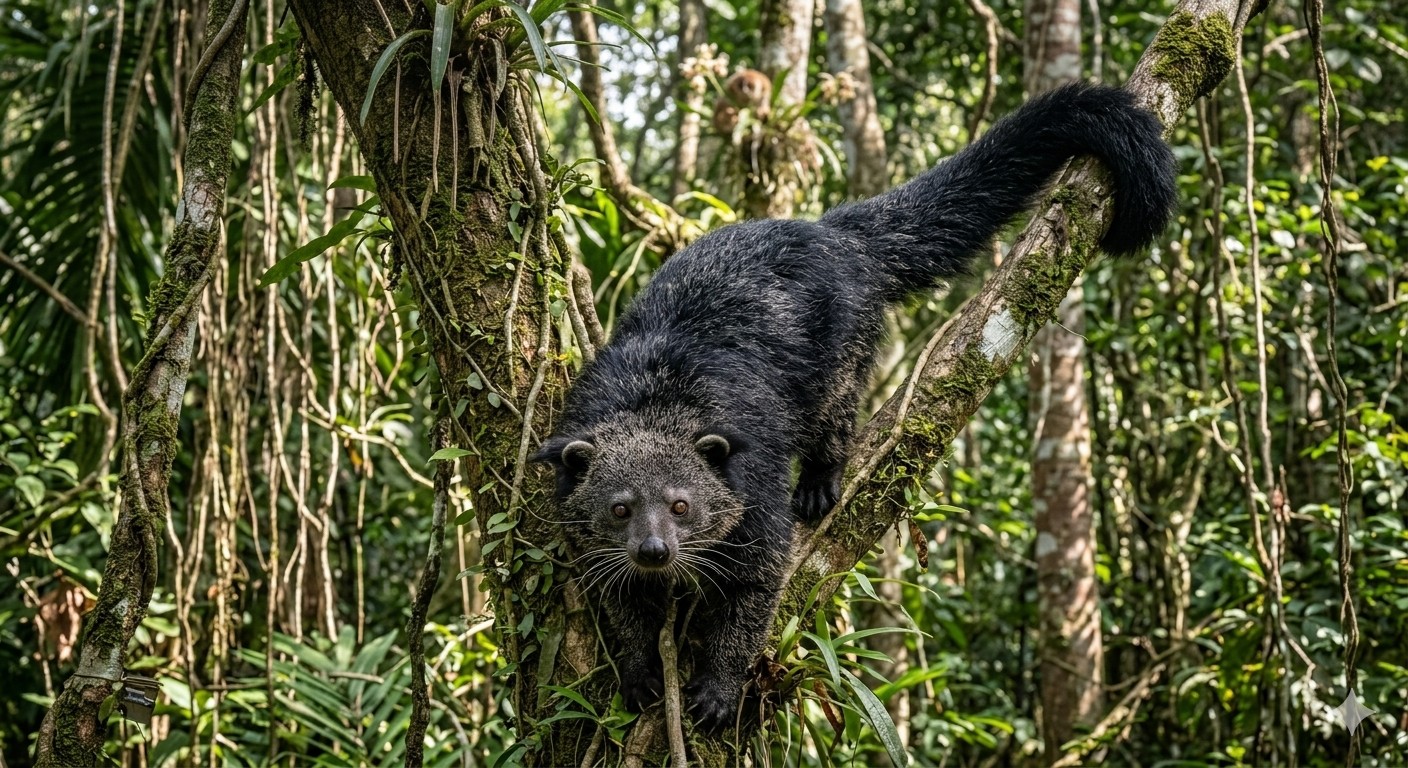
The Binturong is one of Bangladesh's most unusual forest mammals. Elusive, mostly arboreal, and ecologically important, it helps forests regenerate while depending on the very canopy systems that are under pressure across the region.
Key Insights
- The Binturong is a rare, tree-dwelling mammal found in Bangladesh’s forests.
- The latest publicly reported Bangladesh evidence is camera-trap footage from the Hill Tracts.
- Binturongs are important seed dispersers, especially for figs.
- They depend heavily on connected forest canopy and tree cover.
- Deforestation and habitat fragmentation are the biggest threats to their survival.
A Hidden Forest Mammal with Outsized Ecological Value
The Binturong is often overlooked because it is difficult to see, active at low-light hours, and spends much of its time in the canopy. Yet ecologically it matters far more than its low public profile suggests. Across tropical forests, binturongs are closely tied to fruit resources, especially figs, and their movement through the canopy helps disperse seeds across the landscape.
That makes the species important not only as wildlife, but as a contributor to forest regeneration. Where tree cover remains connected and fruiting resources are available, Binturongs can help maintain ecological processes that support wider biodiversity.
Quick Facts
Common Name
Binturong
Scientific Name
Arctictis binturong
Main Niche
Arboreal omnivore and forest seed disperser
Key Food Resource
Figs and other fruit
Bangladesh Takeaway
Rarely reported, but ecologically important
Why the Binturong Matters
The Binturong matters because forests do not persist through trees alone. They also depend on animals that move seeds, link habitat patches, and support natural regeneration. In that sense, the Binturong is part of the machinery of forest resilience.
Arboreal mammal
The Binturong spends much of its life in trees and is strongly adapted to canopy movement.
Fig specialist role
Figs are a major food source, making the species especially important for seed dispersal in tropical forests.
Nocturnal and elusive
Because it is hard to detect, the species can persist unnoticed and still remain underprotected.
Forest-health indicator
Its presence often suggests that a landscape still retains enough canopy structure to support sensitive mammals.
Latest Publicly Reported Bangladesh Evidence
Publicly available Bangladesh reporting points to camera-trap footage from the Hill Tracts, highlighted by The Business Standard, as a notable modern record of the species. That report referenced footage shared by Creative Conservation Alliance and described a rare behavioral view of a Binturong moving on the ground. That makes it useful as the latest broadly visible public evidence, even though it should not be treated as a live tracking feed or a full national population update.
Latest public record
Hill Tracts camera-trap footage
Public reporting in Bangladesh highlighted Creative Conservation Alliance camera-trap footage from the Hill Tracts showing a Binturong, including unusual ground movement behavior.
What it means
Evidence of persistence, not security
The footage is encouraging because it confirms persistence in Bangladesh, but a rare appearance should not be mistaken for population stability.
Why records are scarce
Low detectability
The species is nocturnal, arboreal, and secretive, which makes recent records difficult to collect and easy to underestimate.
Best interpretation
Use cautious wording
It is safer to describe this as the latest publicly reported Bangladesh evidence rather than claim a live or continuously updated sighting record.
Ecological Niche: What the Binturong Does in a Forest
The Binturong’s ecological niche is not just “living in trees.” It is better understood as a canopy-linked omnivore with major seed-dispersal value. Research has repeatedly emphasized its role in moving fig seeds, which is especially important because figs are year-round food resources for many forest animals and help stabilize food webs.
Canopy-dependent frugivore-omnivore
Binturongs use forest canopy as their main movement space while feeding on fruits, especially figs, along with other plant and animal matter.
Seed dispersal specialist value
By consuming fruit and passing seeds through the gut, they help regenerate forest vegetation and support long-term ecosystem resilience.
Edge-sensitive forest mammal
Research suggests the long-term conservation value of seed-dispersing mammals like binturongs becomes especially important in fragmented and degraded forests.
Bridge between species and forest recovery
Their ecological niche links wildlife survival directly to forest restoration, because losing binturongs can weaken natural seed movement across landscapes.
Major Threats
For a canopy-dependent species, even moderate habitat damage can have outsized consequences. The Binturong is especially vulnerable when connected tree cover disappears.
Deforestation
Clearing forests removes essential habitat and breaks the canopy routes Binturongs rely on for feeding, resting, and movement.
Habitat fragmentation
When forests are divided into smaller patches, Binturongs struggle to move safely between trees and become more exposed on the ground.
Hunting and capture
In some areas, Binturongs face pressure from opportunistic hunting or capture, adding stress to already vulnerable populations.
Low awareness
Because the species is not widely known, it often receives less conservation attention than larger mammals despite its ecological importance.
What Needs to Happen Next
Protect remaining forest ecosystems and canopy connectivity in Bangladesh.
Support targeted monitoring to improve Bangladesh-specific records of the species.
Treat the latest Bangladesh sightings as a signal for stronger habitat protection, not proof that populations are secure.
Increase awareness about the Binturong’s role in seed dispersal and forest regeneration.
Strengthen protection against hunting, capture, and habitat degradation.