The Clouded Leopard: Bangladesh’s Most Elusive Wild Cat
Hidden deep within the forests of the Chittagong Hill Tracts, the clouded leopard remains one of the rarest and least understood predators in Bangladesh.
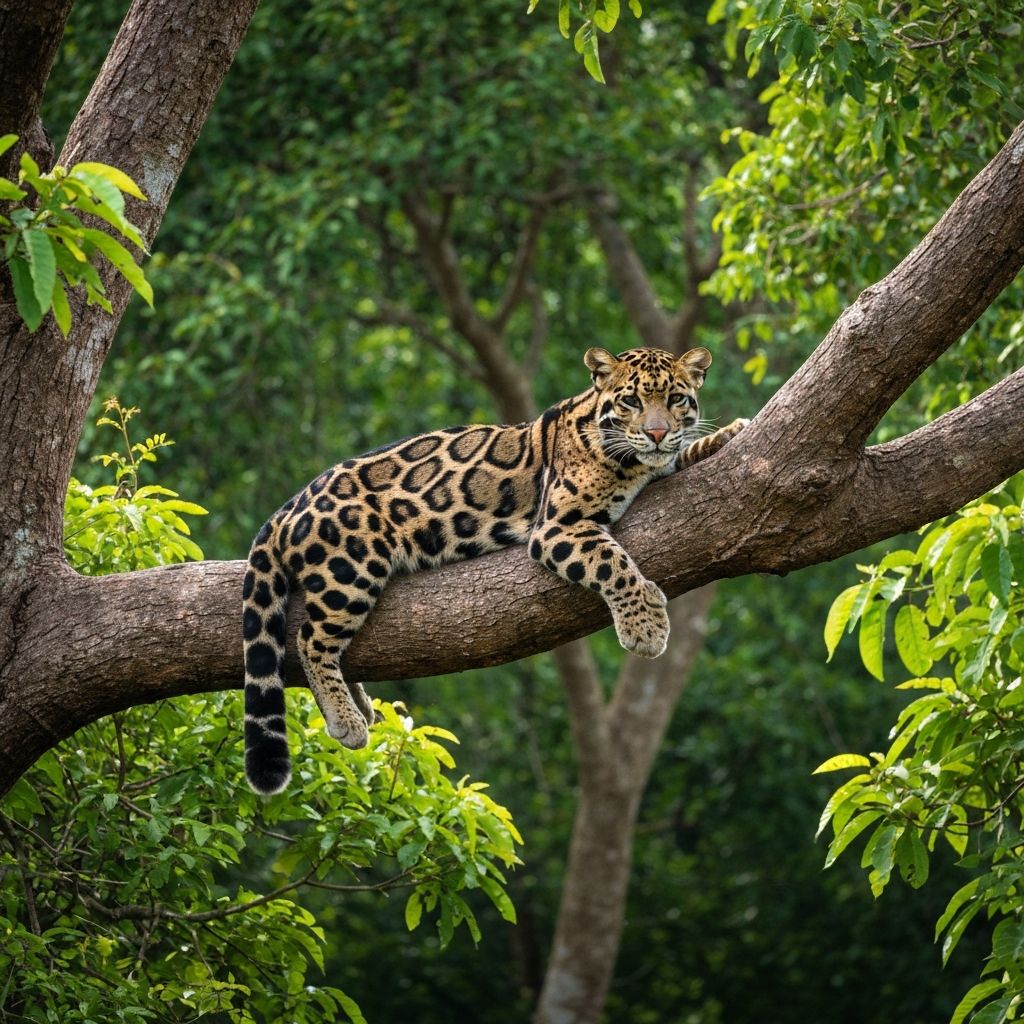
Key Insights
- Clouded leopards are among Bangladesh’s rarest forest predators.
- They survive mainly in the forests of the Chittagong Hill Tracts.
- Most confirmed records come from camera trap evidence.
- Forest loss and fragmentation are major threats.
- Protecting them helps preserve entire ecosystems.
Confirmed Sightings in Bangladesh (2015–2025)
Verified sightings rely mainly on camera trap records from the Chittagong Hill Tracts, especially the Sangu-Matamuhuri forest.
| Year | Location | Details |
|---|---|---|
| 2015 | Sangu-Matamuhuri | First confirmed camera trap record (CCA) |
| 2018 | Sangu-Matamuhuri | Single individual recorded |
| 2021 | Sangu & Kaptai | Multiple individuals recorded |
| 2022 | Rangamati | Confirmed sighting |
| 2023 | Eastern Bangladesh | Recorded by Dr. Muntasir Akash |
| 2025 | Sangu-Matamuhuri | Latest confirmed camera trap image |
Live Capture (2023)
A live clouded leopard was captured in Rangamati and is now kept at Dulahazara Safari Park.
Earlier Records
Past encounters were reported from Jamalpur, Bandarban, and Kaptai National Park.
Key contributors include the Creative Conservation Alliance and Dr. Muntasir Akash, whose research has helped confirm the species’ presence in Bangladesh.
Ecological Role
As a mid-to-top predator, the clouded leopard helps regulate prey populations, maintaining ecological balance in forest ecosystems.
Research Gaps & Knowledge Limitations
Although there have been confirmed sightings, the Clouded Leopard in Bangladesh remains critically understudied. Most available knowledge is based on scattered records, highlighting major scientific gaps that must be addressed for effective conservation.
Foundational Knowledge & Taxonomy
- • No reliable population estimate or baseline data
- • Population trends remain completely unknown
- • Subspecies identity has not been genetically verified
Distribution & Habitat Ecology
- • True distribution range remains uncertain
- • Habitat preferences and movement patterns unknown
- • Fragmentation impacts not studied
Population Ecology & Behavior
- • No Bangladesh-specific data on diet or reproduction
- • Survival rates and mortality causes unknown
- • No behavioral or ecological field studies
Threats & Human Interaction
- • Poaching and trade pressure not quantified
- • Human-wildlife conflict not studied
- • Local ecological knowledge undocumented
Conservation & Policy
- • No national conservation action plan
- • Legal protection clarity is limited
- • Weak enforcement against poaching risks
Research & Methodological Gaps
- • Lack of systematic camera trap surveys
- • No long-term monitoring programs
- • Absence of genetic sampling and DNA data
These gaps highlight that the Clouded Leopard is not only rare but also scientifically underrepresented. Without basic population, ecological, and threat data, conservation strategies remain incomplete and uncertain.
Addressing these challenges requires systematic camera-trap surveys, genetic research, habitat monitoring, and stronger integration of local communities into conservation efforts. Protecting the species depends not only on preserving forests, but also on understanding how it survives within them.
Major Threats
Forest loss
Deforestation and land conversion continue to reduce dense habitats required by clouded leopards.
Habitat fragmentation
Development divides forests into smaller patches, isolating populations.
Poaching
Illegal hunting for fur and body parts remains a serious threat.
Limited monitoring
Lack of consistent research makes conservation difficult.