Bangladesh’s Fishing Cat: A Wetland Species Under Threat
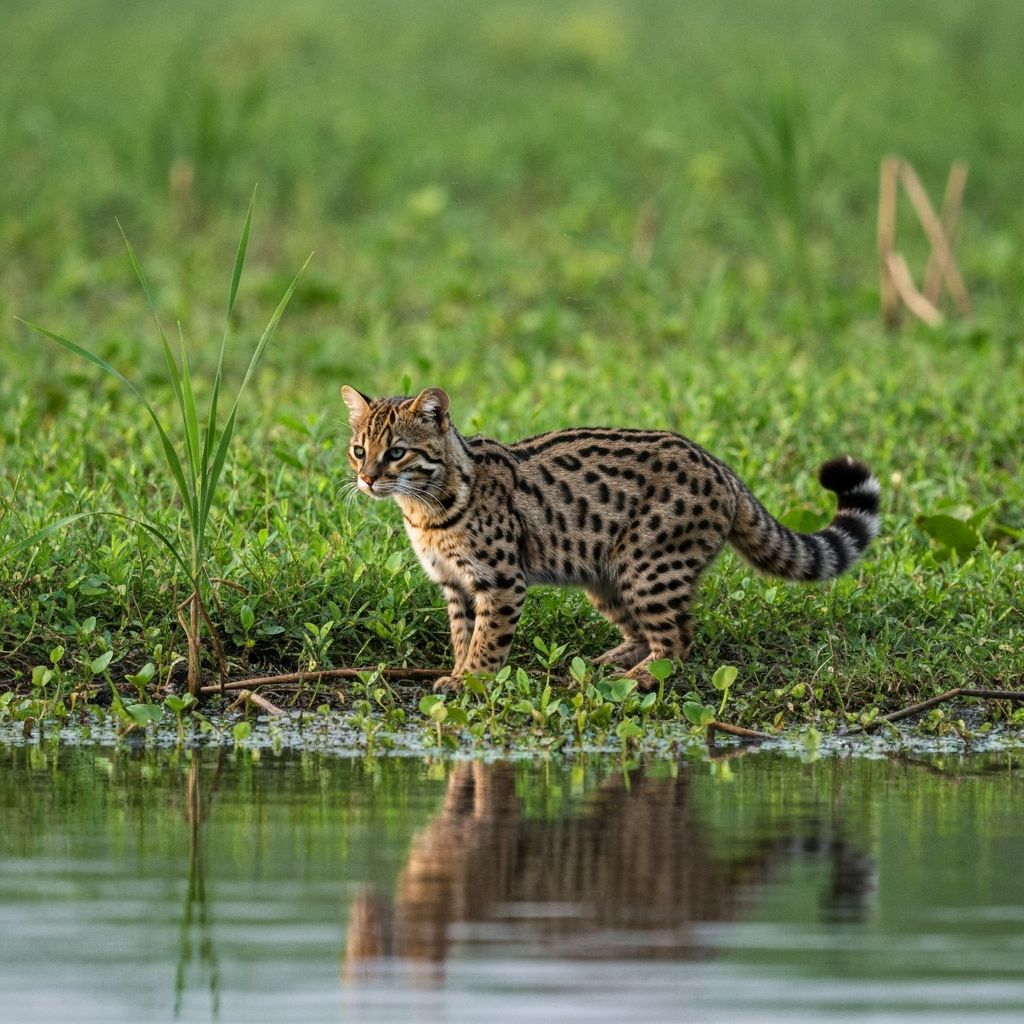
The fishing cat, locally known as Mechho Bagh, is one of Bangladesh’s most unique wild predators. Living in wetlands, rivers, and marshes, this elusive feline is now facing increasing threats from habitat loss, human conflict, and environmental degradation.
Key Insights
- Fishing cats are wetland-dependent predators found across Bangladesh.
- Over 95% of their habitats lie outside protected areas.
- Human-wildlife conflict is one of the biggest threats.
- Wetland destruction and aquaculture expansion are shrinking habitats.
- Pollution is emerging as a serious long-term risk.
A Species Living Outside Protection
The fishing cat (Prionailurus viverrinus) is widely distributed across Bangladesh, with confirmed populations in over 150 subdistricts. However, this apparent distribution hides a serious problem. More than 95% of these populations exist outside protected areas, meaning they survive in landscapes dominated by humans. Wetlands are being rapidly transformed into agricultural land, aquaculture zones, and urban settlements, leaving fishing cats increasingly exposed to danger.
Globally, the fishing cat is classified as Vulnerable, but within Bangladesh, its situation is even more concerning. With a declining population trend and increasing human pressure, the species faces a growing risk of local extinction if conservation efforts are not strengthened.
Major Threats to the Fishing Cat
Habitat loss
Rapid wetland destruction caused by urbanization, agriculture, and aquaculture expansion is reducing the natural habitat of fishing cats across Bangladesh.
Human-wildlife conflict
Fishing cats are frequently killed due to fear and misunderstanding, often even without proven economic damage to livestock or poultry.
Accidental trapping
Fishing nets, traps, and aquaculture enclosures often capture fishing cats, leading to injury or death.
Illegal captivity & trade
Some fishing cats are captured and kept in poor conditions in private collections or illegal facilities.
Pollution
Heavy metals, pesticides, and plastic pollution contaminate wetlands, affecting both fishing cats and their prey.
Habitat loss remains the most critical long-term threat. As wetlands are drained or converted, fishing cats are forced into closer contact with humans. This leads directly to increased conflict, where animals are often killed due to fear or misunderstanding.
In many areas, fishing cats are trapped accidentally in nets or aquaculture enclosures. Even when captured unintentionally, they are frequently killed by farmers trying to protect their livelihoods. Illegal captivity and trade further worsen the situation, with animals being kept in poor conditions without proper care.
Pollution is an emerging but serious threat. Contaminated water, heavy metals, and agricultural chemicals are entering wetland ecosystems, affecting fish populations and accumulating in the bodies of fishing cats. This not only threatens the species but also indicates broader environmental risks.
Conservation and the Way Forward
Despite these challenges, conservation efforts are beginning to show promise. Rescue and release programs have successfully returned captured fishing cats to the wild, with some cases showing reunification of kittens with their mothers. These approaches demonstrate that practical, community-based solutions can work.
Protecting the fishing cat requires a combination of strategies, including wetland conservation, stronger law enforcement, and community awareness. Simple measures such as improved fencing around fish farms and better livestock protection can significantly reduce conflict.
Ultimately, the fishing cat represents more than a single species. It is a symbol of Bangladesh’s wetlands. Protecting it means preserving entire ecosystems that support biodiversity, water resources, and human livelihoods.