Canids · Bangladesh Field Dossier
Bengal Fox
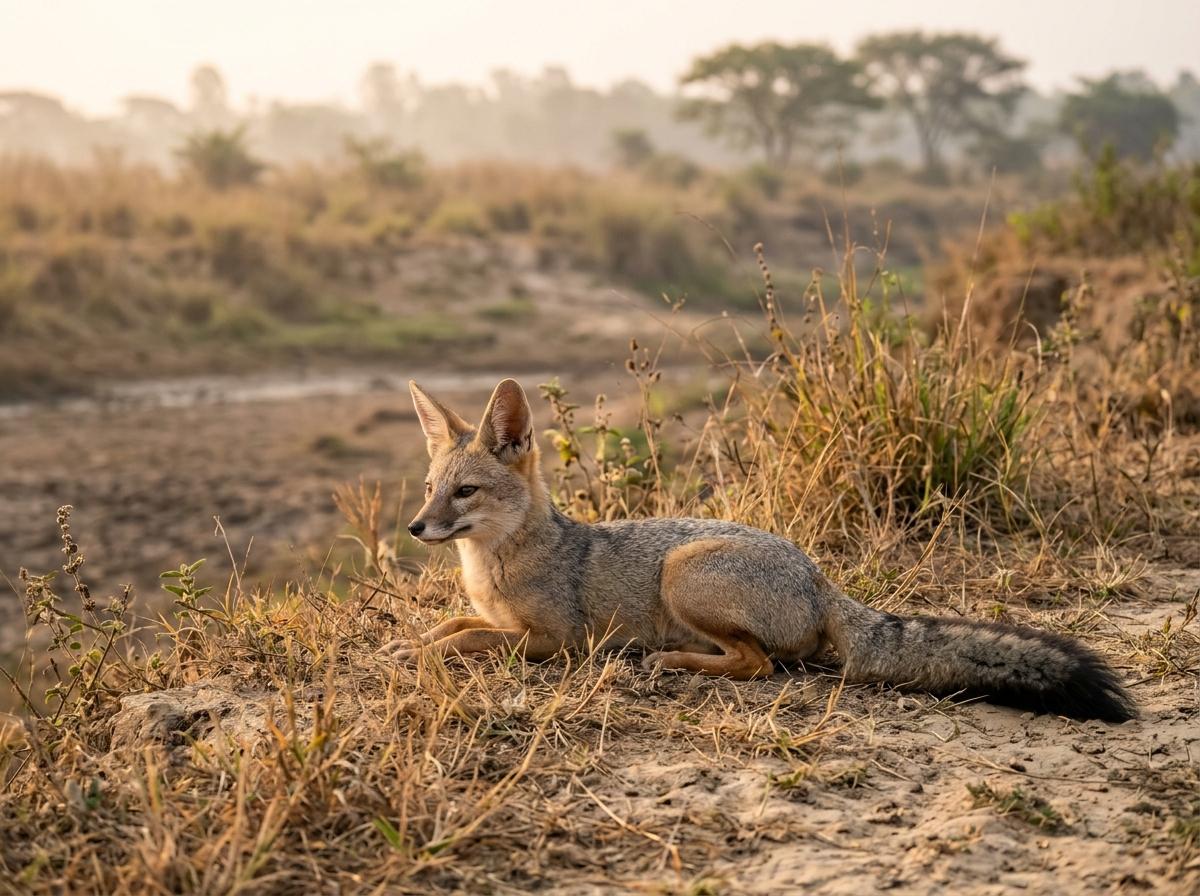
Bangladesh's true native fox—a dainty, buff-grey canid distinguished from all lookalikes by its sharp dark-tipped bushy tail.
- Global IUCN Red List
- Least Concern (LC)
- IUCN Bangladesh (2015)
- Least Concern (LC)
- Ecological Guild & Activity
- Insectivore & Small-Prey Omnivore · Crepuscular & Nocturnal
- Typical Body Mass & Population
- 1.8–3.2 kg · Localized but Stable in Open Landscapes
Habitat & Population Trend
Habitat: Open Grasslands, Barind Scrub, Sandbars (Chars) & Dry Terraces
Trend: Stable to Slowly Declining with Den Disturbance
Primary Conservation Threats
Den excavation, agrochemical exposure, free-ranging dogs & roadkill
Ecological Role & Significance
Endemic Indian-subcontinent fox suppressing field crickets, beetles, and field rats.
Field Evidence & Conservation Assessment in Bangladesh
Unlike the temperate Red Fox, Vulpes bengalensis is an endemic South Asian species adapted to drier Barind terraces, fallow grasslands, and river chars across Rajshahi, Rangpur, Dhaka, and Khulna divisions. Den complexes with multiple bolt holes protect litters during dry seasons.
Primary References & Checklists
- · IUCN Bangladesh (2015). Red List of Bangladesh, Volume 2: Mammals.
- · WildMentor / Bangladesh Grassland Canid Field Monitoring.
Northwest, Central, Barind Tract & Riverine Char Grasslands
Documented landscapes, reserve forests, and habitats linked to Bengal Fox (Vulpes bengalensis):
- Barind Tract Agricultural Terraces
- Padma–Jamuna Char Grasslands
- Madhupur Sal Fringe Scrub
Bengal Fox Conservation FAQ (Bangladesh)
How can you tell a Bengal Fox from a Golden Jackal?
The Bengal Fox is much smaller (under 3.2 kg) with huge upright ears, pointed muzzle, slender legs, and a noticeably long, bushy black-tipped tail.
Where do Bengal Foxes build dens in Bangladesh?
They dig multi-entrance underground burrows along raised embankments, dry Barind soil ridges, and grassy river char banks.
Related Family Canidae in Bangladesh