Other Wildlife · Bangladesh Field Dossier
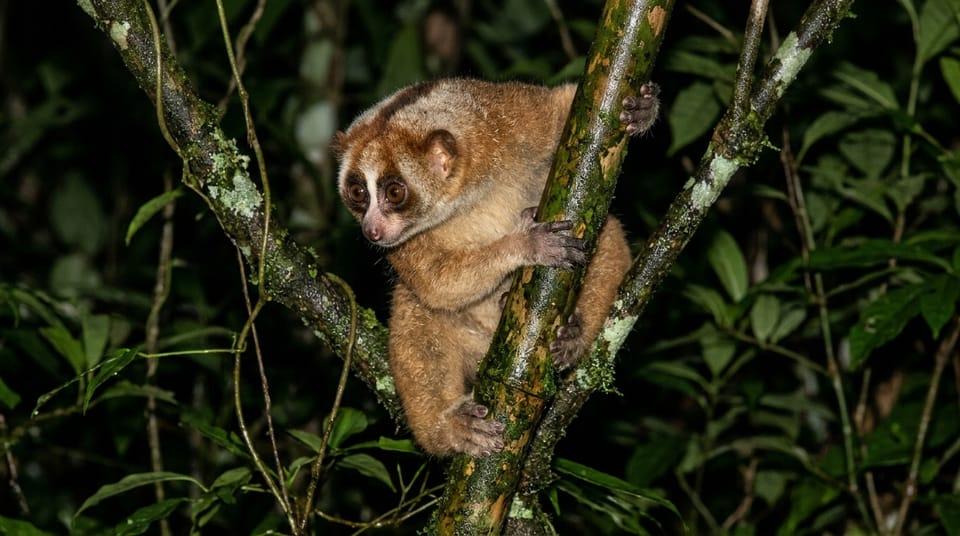
Bengal Slow Loris
Bangladesh's rare nocturnal venomous primate, monitored through VHF radio telemetry and rapid forest rescue initiatives in Sreemangal and Pittachhara.
- Global IUCN Red List
- Endangered (EN)
- IUCN Bangladesh (2015)
- Endangered (EN)
- Ecological Guild & Activity
- Exudativore & Insectivore (Tree Gum, Insects & Nectar) · Strictly Nocturnal
- Typical Body Mass & Population
- 1.1–2.1 kg · Unknown (Declining)
Habitat & Population Trend
Habitat: Evergreen & Mixed Hill Forest Canopies
Trend: Decreasing
Primary Conservation Threats
Deforestation, canopy fragmentation, electrocution & illegal pet trade
Ecological Role & Significance
Bangladesh's signature nocturnal canopy primate monitored via WildlifeScope telemetry.
Field Evidence & Conservation Assessment in Bangladesh
Frontline WildlifeScope radio-telemetry collaborations track sleeping-tree selection, canopy gap crossings, and safe reintroduction protocols for confiscated individuals across eastern Bangladesh.
Primary References & Checklists
- · IUCN Bangladesh (2015). Red List of Bangladesh, Volume 2: Mammals.
- · WildlifeScope & Plumploris e.V. Pittachhara VHF Telemetry Field Logs.
Sylhet & Chittagong Hill Tracts, Bangladesh
Documented landscapes, reserve forests, and habitats linked to Bengal Slow Loris (Nycticebus bengalensis):
- Lawachara National Park
- Pittachhara Forest
- Rema-Kalenga Wildlife Sanctuary
- Satchari National Park
Featured Research Brief
Tracking a Bengal Slow Loris in Pittachhara Forest: Radio Telemetry Fieldwork
Follow an all-night VHF radio telemetry session monitoring Bengal Slow Loris canopy movement and habitat use in Bangladesh.
Read full article →Related Threat & Field Report
Nigel Marven Documents Slow Loris Conservation in Bangladesh
Frontline interview highlighting Plumploris e.V. telemetry fieldwork and conservation realities in Sreemangal.
Explore report →Bengal Slow Loris Conservation FAQ (Bangladesh)
Is the Bengal Slow Loris venomous?
Yes. Slow lorises are among the very few venomous mammals globally, combining brachial gland oil with saliva in defense.
How does WildlifeScope monitor Bengal Slow Lorises in Bangladesh?
Field teams use VHF radio telemetry, red-filtered nocturnal observation, GPS canopy mapping, and rapid rescue-rehabilitation protocols.