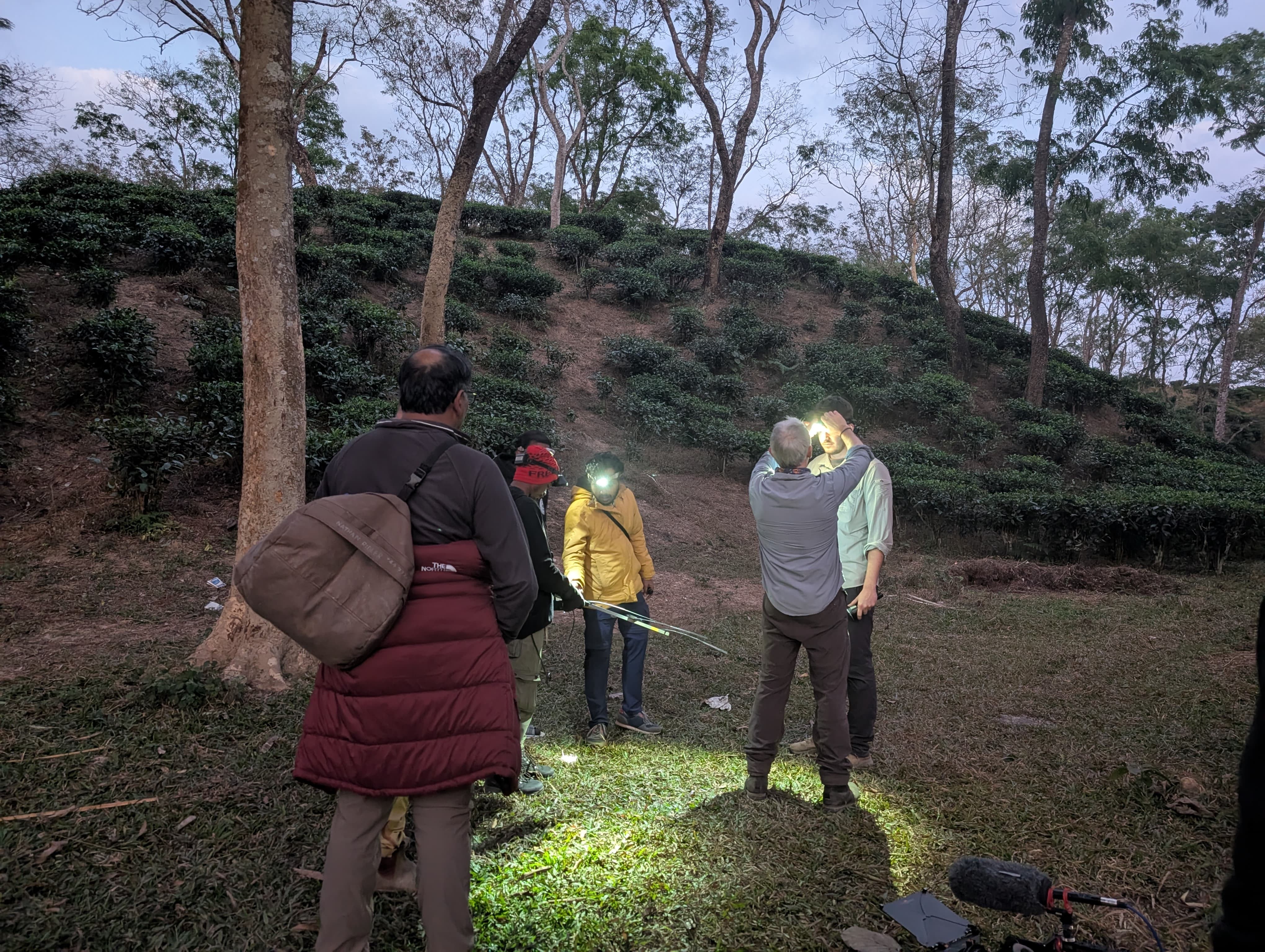
An academic field visit to Lawachara National Park focused on surveying mammal diversity and gaining practical insights into wildlife research in Bangladesh.
Entering the Forest Landscape
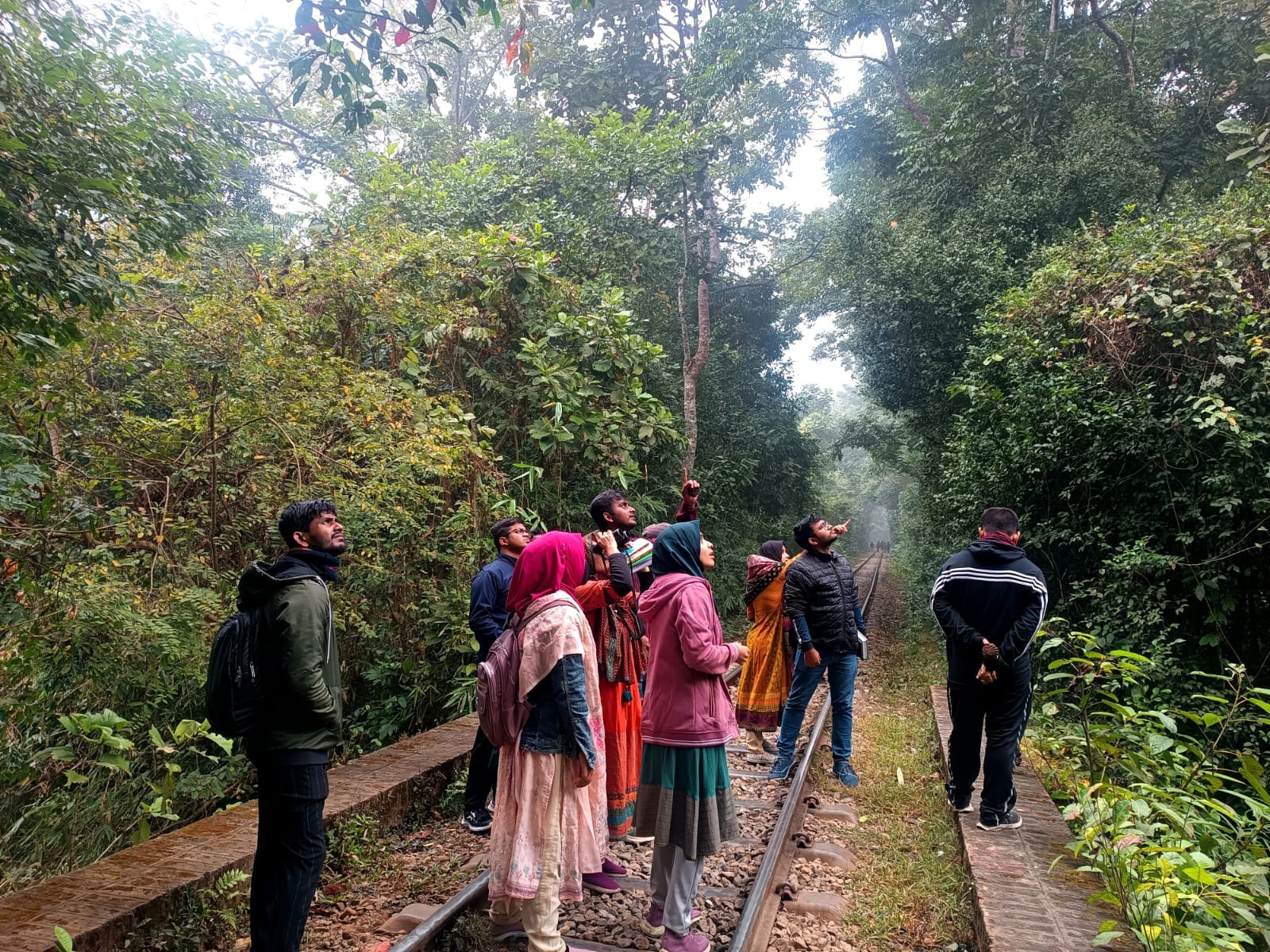
Academic field team observing forest canopy and habitat structure in Lawachara National Park.
On March 13, 2025, we visited the Sylhet region as part of our academic fieldwork, focusing on the ecological richness of Lawachara National Park.
The forest presented a complex landscape of dense vegetation, narrow trails, and layered canopy structures, offering an ideal environment for studying wildlife diversity, particularly mammals.
Understanding Mammal Diversity in the Field
The primary objective of the field visit was to survey mammalian diversity within the park. Lawachara is known for its rich assemblage of species, including primates, small carnivores, and arboreal mammals.
Field observation focused on identifying habitat features, movement signs, and ecological indicators that suggest the presence of different mammalian groups.
Learning Through Direct Observation
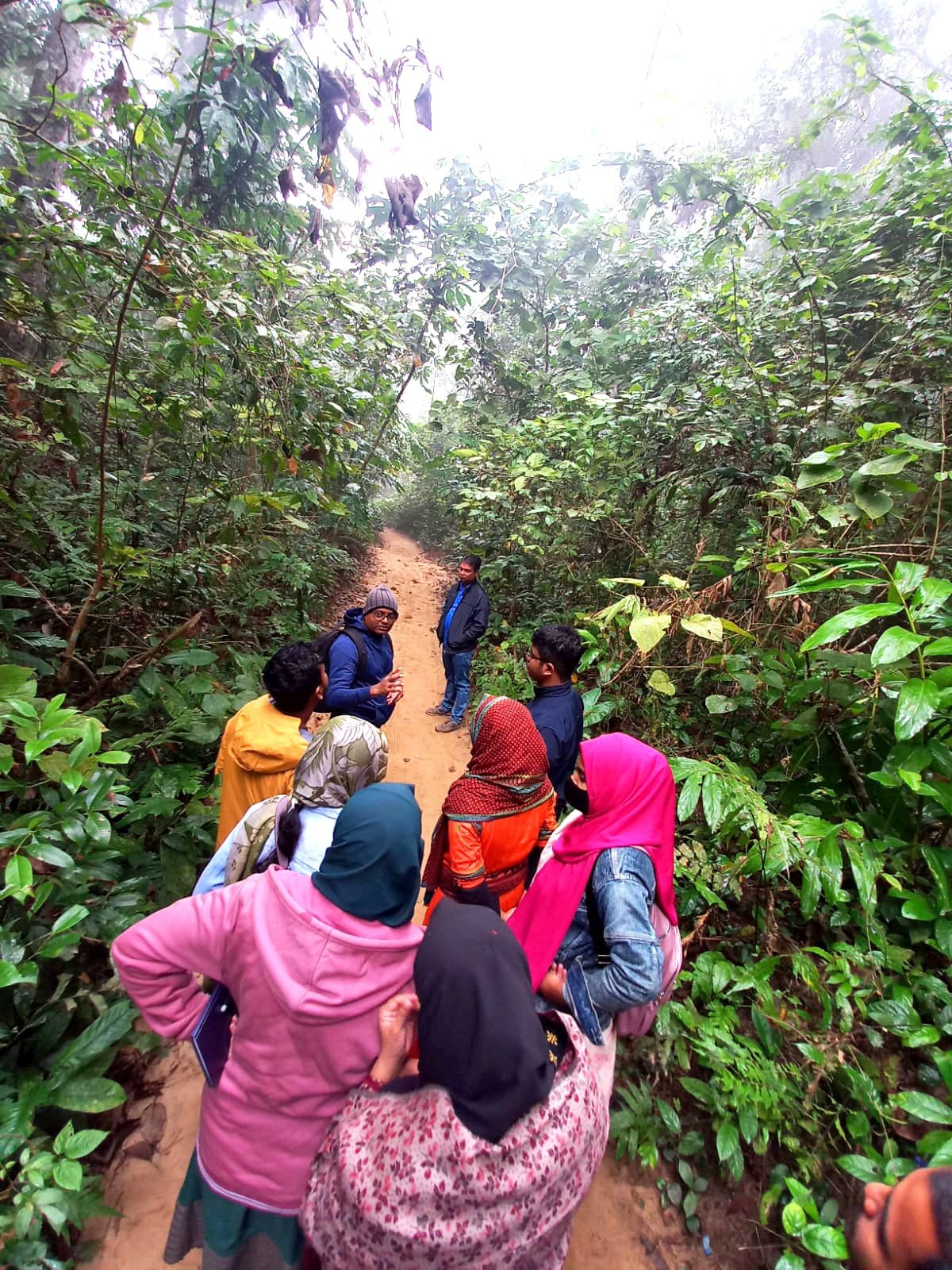
Field discussion on habitat structure and mammal ecology along forest trails in Lawachara.
Unlike classroom learning, field-based study requires interpreting subtle signs such as tracks, sounds, and vegetation patterns.
We examined forest structure, canopy connectivity, and understory density, all of which influence mammal distribution and behavior.
Guidance from Field Expertise
During the fieldwork, our supervisor, Dr. Jadob Kumar, provided key insights into mammalian ecology and research methodology.
He explained how different species utilize forest strata, how ecological niches are formed, and how researchers interpret field data to understand species presence and distribution.
These insights bridged the gap between theoretical knowledge and real-world application.
Fieldwork as a Research Foundation
This visit also supported our thesis work, reinforcing the importance of field data in ecological research.
Understanding mammal diversity is not limited to species identification. It involves analyzing habitat relationships, ecological interactions, and environmental pressures.
Why Lawachara National Park Matters
Lawachara National Park is one of Bangladesh’s most important protected areas, supporting a wide range of biodiversity.
Its role as a habitat for mammals makes it critical for conservation research, ecological monitoring, and long-term biodiversity protection.
The Value of Academic Field Experience
Field visits like this are essential for developing practical understanding in wildlife research.
They allow students and researchers to connect theoretical concepts with real ecosystems, strengthening both analytical skills and conservation awareness.