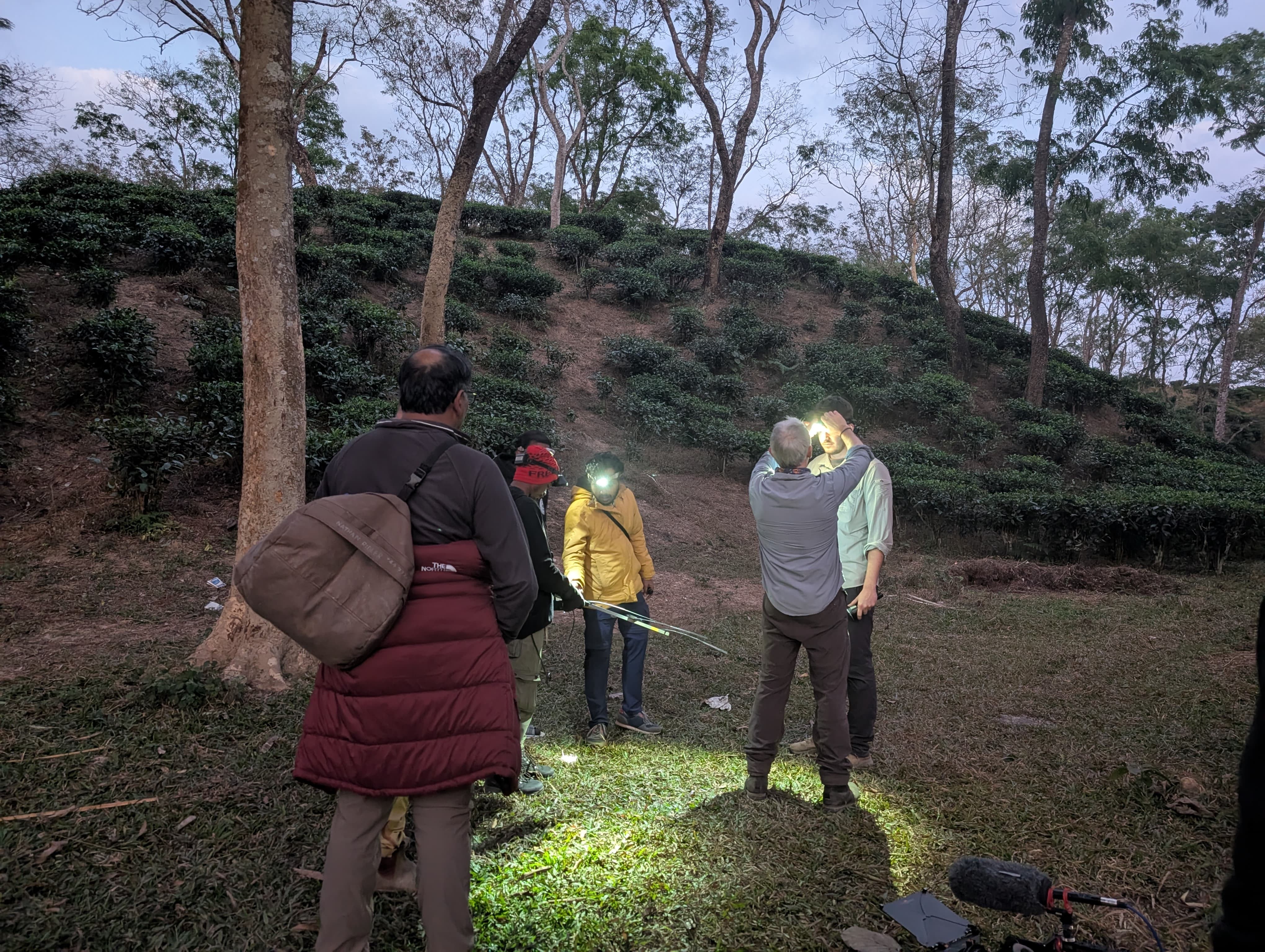
A night of radio telemetry in Pittachhara Forest revealed the movement, habitat use, and fragile reality of one of Bangladesh’s most elusive nocturnal primates.
The Beginning: A Long Night Ahead
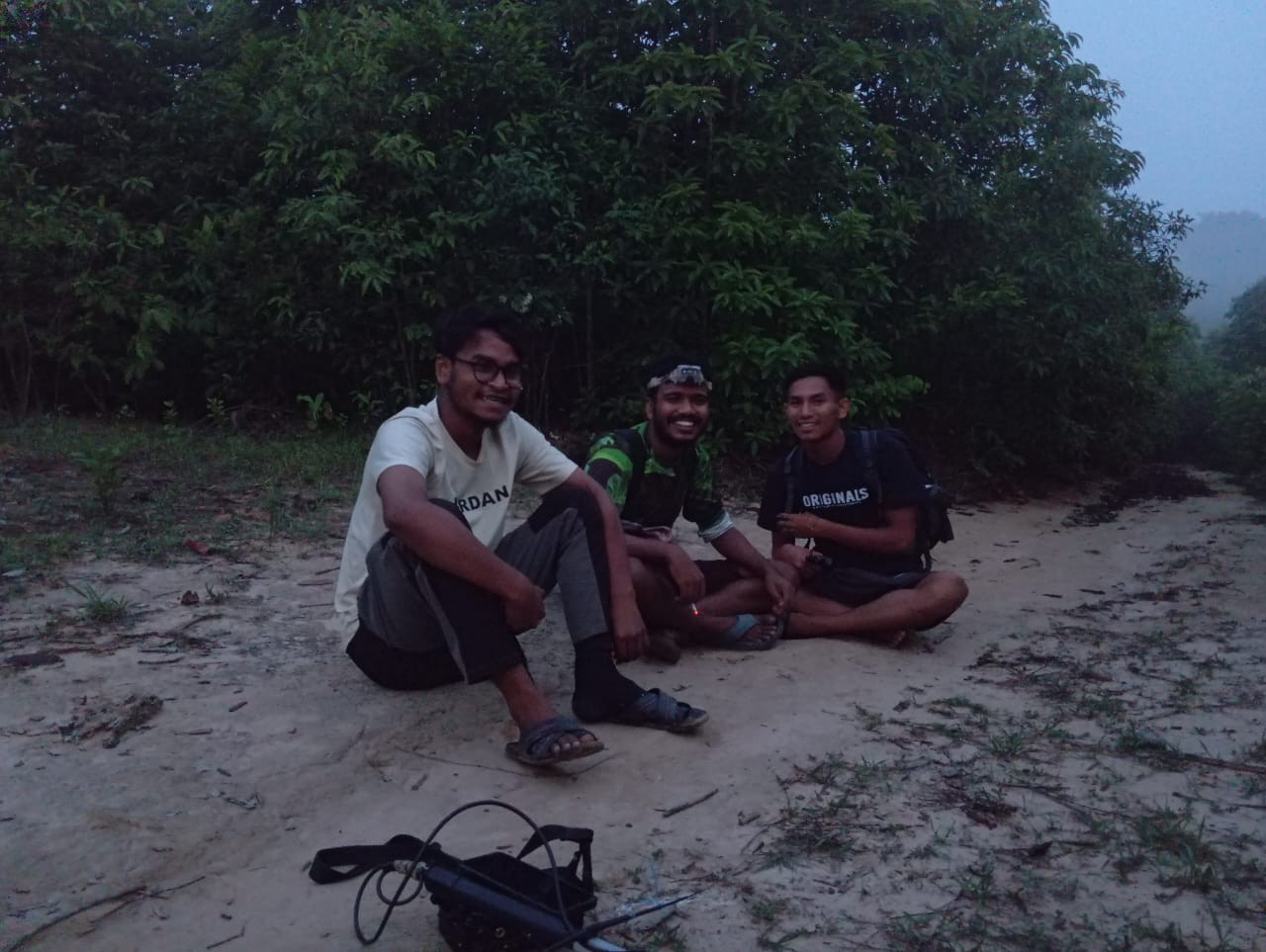
Field team resting after an all-night Bengal Slow Loris tracking session in Pittachhara Forest, Bangladesh.
Most people will never see a Bengal Slow Loris in the wild. Even fewer will spend an entire night following one through dense forest, guided only by faint signals in the dark.
On June 15, 2025, while working as a Field Manager with Plumploris e.V., we tracked a radio-collared slow loris deep inside Pittachhara Forest. What began as a routine telemetry session became a powerful reminder of how fragile, and how extraordinary, this species really is.
We started before dusk with the essential equipment ready: radio telemetry receiver, directional antenna, GPS logging tools, and the goal of locating and monitoring a radio-collared Bengal Slow Loris.
Moving Through the Dark: Following Signals, Not Sight
Tracking a slow loris is not about seeing. It is about listening and interpreting signals.
Each step required adjusting antenna direction, reading signal strength, and moving quietly through uneven terrain. As darkness settled, the signal came alive. A faint rhythmic beep echoed through the receiver. Somewhere ahead, hidden in the canopy, the loris was moving.
The forest changed at night. Sounds sharpened. Visibility dropped. Every movement felt slower, more deliberate. For hours, we followed the signal. Sometimes it grew stronger. Sometimes it vanished completely. Each time it disappeared, we stopped, recalibrated, and searched again.
The Moment: Encounter Under Red Light
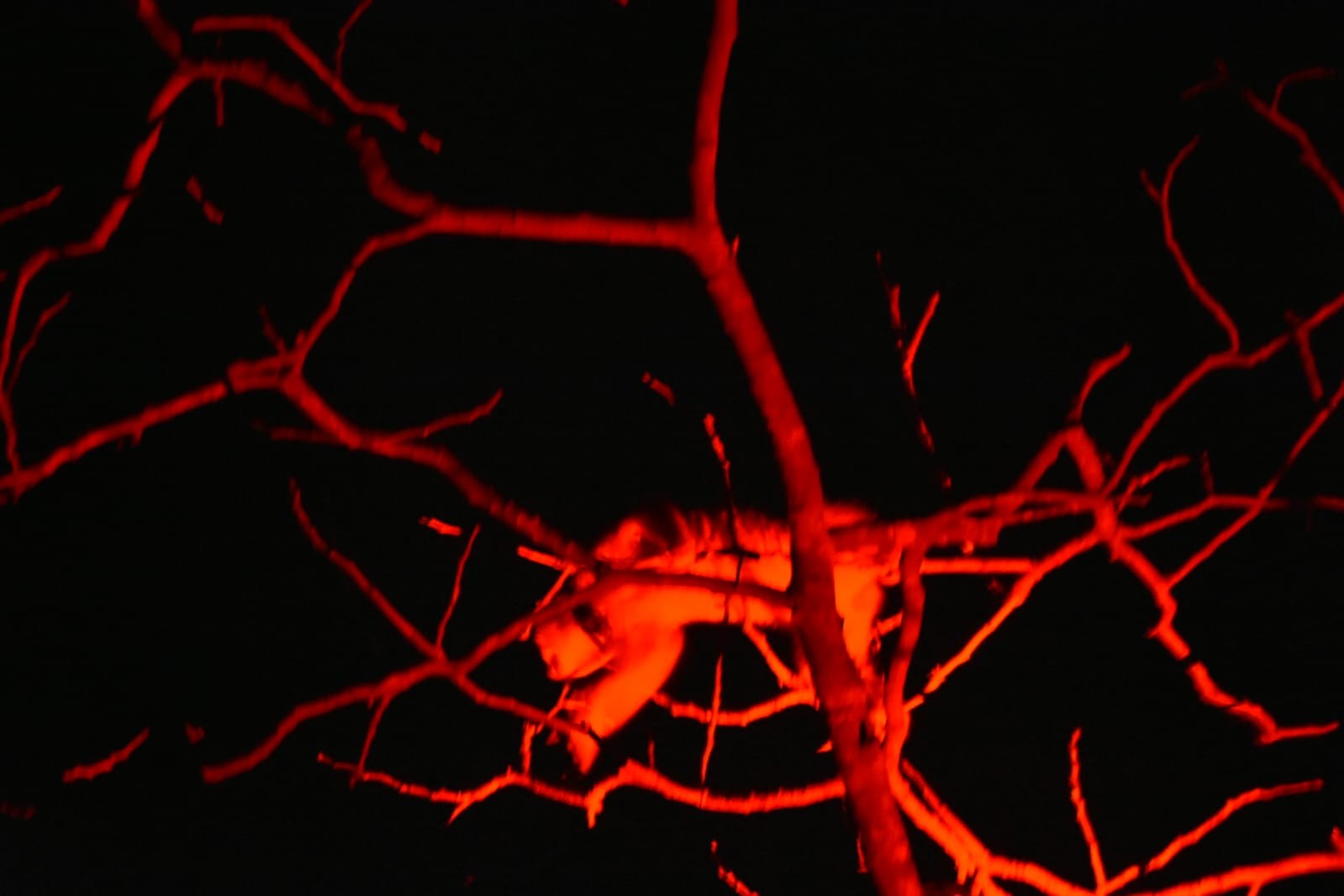
A Bengal Slow Loris observed in the canopy during radio telemetry tracking in Pittachhara Forest.
After hours of tracking, we finally located her.
High in the branches, barely visible, the Bengal Slow Loris moved slowly across the canopy. Under red-filtered light, her presence felt almost unreal.
She paused, gripping a branch, scanning her surroundings. Silent. Alert. Completely adapted to a world most people never enter. In that moment, the data became something more than numbers. It became a living story.
Data Collection in the Night
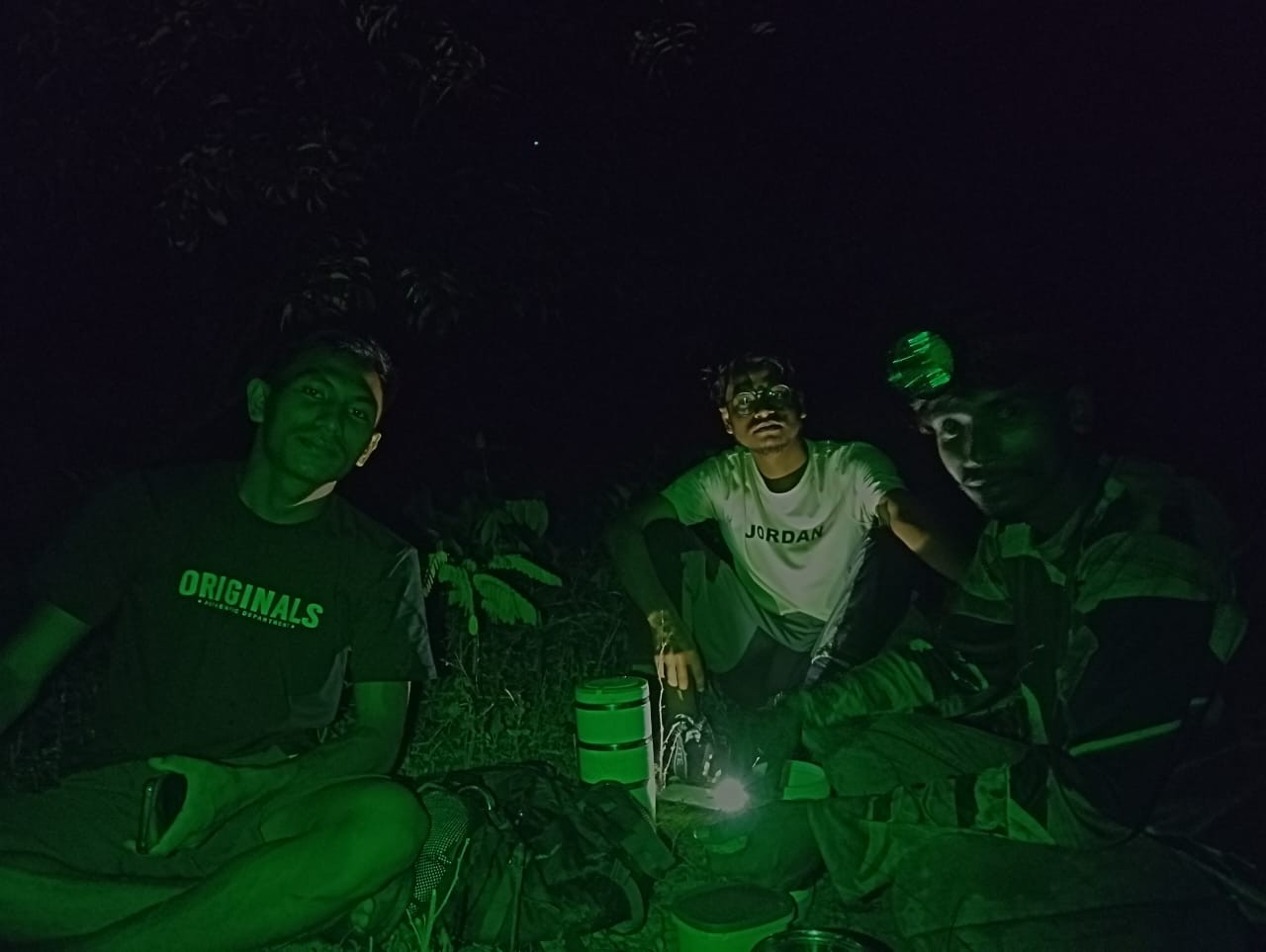
Night-time radio telemetry tracking using red light to observe a Bengal Slow Loris without disturbance.
Throughout the night, we recorded movement patterns, tree usage, feeding behavior, and GPS coordinates.
This data is critical for understanding habitat use, identifying conservation priorities, and protecting slow loris populations in Bangladesh. But collecting it is never easy. Hours passed in near darkness, guided only by signal pulses and instinct.
After the Night: Exhaustion and Reflection
By dawn, the forest changed again. The signal faded. The loris disappeared into the canopy. And we stopped.
The first light revealed what the night had hidden: tired bodies, muddy clothes, and silent satisfaction. That moment, sitting on the forest floor, exhausted but curious, captured something deeper than research. It captured commitment.
Why Bengal Slow Loris Conservation Matters
The Bengal Slow Loris (Nycticebus bengalensis) is one of the most elusive primates in Bangladesh.
Despite being listed as Endangered, it faces constant threats including habitat loss, illegal wildlife trade, and lack of awareness.
Radio telemetry studies like this help answer critical questions: where do they move, what habitats do they depend on, and how can we protect them effectively? Without this data, conservation becomes guesswork.
Field Insight: What Radio Telemetry Reveals
Radio-collar tracking allows conservationists to monitor nocturnal species with minimal disturbance, map home ranges, and understand survival challenges.
In forests like Pittachhara, this remains one of the most effective tools for primate conservation in Bangladesh.
“Conservation is not always dramatic. Sometimes, it is quiet, slow, and exhausting. But it matters.”
What You Can Do
Support wildlife conservation efforts in Bangladesh.
Raise awareness about slow loris protection.
Never support illegal wildlife trade.
Every small action contributes to protecting species like the Bengal Slow Loris.