Rare Forest Predator
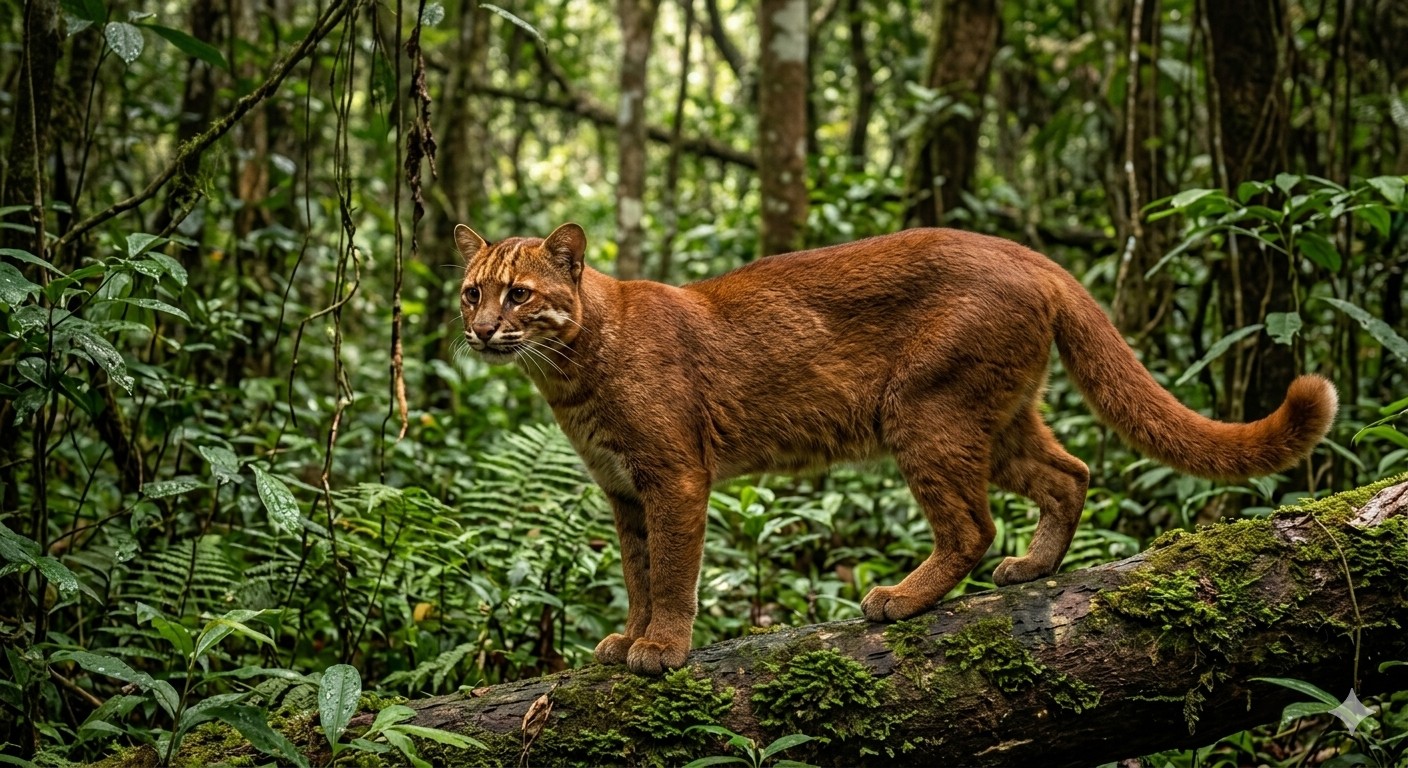
Asian Golden Cat in Bangladesh: A Silent Hunter of the Hill Forests
The Asian Golden Cat is one of the most striking yet least seen wild felines of South and Southeast Asia. In Bangladesh, it represents the hidden richness of the country’s remaining hill forests, where survival depends on intact habitat, low disturbance, and stronger conservation attention.
Key Insights
- The Asian Golden Cat is one of Bangladesh’s rare and elusive wild forest cats.
- It is associated with dense hill forests and low-disturbance habitats.
- Habitat loss and fragmentation are major threats to its survival.
- Limited research and low visibility make conservation more difficult.
- Protecting the Asian Golden Cat helps protect wider forest biodiversity.
A Hidden Cat of Bangladesh’s Forests
The Asian Golden Cat (Catopuma temminckii) is a rare wild feline associated with forest ecosystems across parts of Asia. In Bangladesh, it is believed to persist mainly in the eastern hill forests, where dense vegetation, prey availability, and lower levels of human disturbance provide the conditions it needs to survive.
Unlike more famous carnivores, the Asian Golden Cat rarely appears in public conversation. That does not make it less important. In fact, its rarity and low visibility make it even more vulnerable to being overlooked in conservation planning. Species that remain hidden are often the easiest to lose without warning.
As a forest predator, the Asian Golden Cat is part of a larger ecological network. Protecting it means safeguarding the habitat, structure, and biodiversity of Bangladesh’s remaining hill forests. Its future is closely tied to whether these forests stay connected, functional, and resilient.
Quick Facts
Common Name
Asian Golden Cat
Scientific Name
Catopuma temminckii
Main Habitat
Tropical and hill forests
Likely Strongholds
Chittagong Hill Tracts and other eastern forest landscapes
Conservation Focus
Habitat protection, research, and forest connectivity
Why the Asian Golden Cat Matters
The Asian Golden Cat matters because it depends on landscapes that are becoming increasingly fragile. Forest carnivores need more than just trees. They need cover, prey, and enough connected space to move safely. When such species begin to disappear, it often reflects deeper ecological decline across the whole system.
Forest-dependent
The species is strongly associated with healthy forest cover and low-disturbance landscapes.
Rarely observed
Its elusive behavior means confirmed records are limited and public awareness remains low.
Eastern forests
Bangladesh’s hill forest regions are considered the most likely strongholds for this species.
Indicator species
Its presence suggests forest ecosystems still retain enough structure and prey to support sensitive carnivores.
Major Threats to the Asian Golden Cat
The biggest threats facing the Asian Golden Cat in Bangladesh are linked to shrinking forest landscapes, increasing disturbance, and limited species-specific conservation focus.
Habitat loss
Forest clearing, land conversion, and long-term degradation continue to reduce the habitat needed by the Asian Golden Cat.
Habitat fragmentation
Roads, settlements, and expanding human activity break forest landscapes into smaller patches, reducing safe movement and habitat quality.
Human pressure
As forested landscapes become more disturbed, this secretive cat faces increased risk from encroachment, noise, and shrinking territory.
Poaching and hunting
Although rarely seen, forest cats can still face pressure from illegal hunting, opportunistic trapping, and wildlife trade threats.
Research gap
The Asian Golden Cat receives far less public and scientific attention than larger carnivores, creating conservation blind spots.
Habitat loss remains the primary challenge. As forests are cleared, degraded, or converted to other land uses, the Asian Golden Cat loses the dense habitat structure it depends on. Species that rely on forest cover tend to be especially vulnerable when disturbance becomes permanent.
Fragmentation adds another layer of risk. Even when some forest remains, broken habitat patches can isolate wildlife populations, reduce movement, and expose animals to more human activity. Over time, that can weaken the ecological conditions needed for survival.
Low visibility also creates a conservation problem. Compared with larger and more iconic animals, the Asian Golden Cat receives less research, less public attention, and often less targeted planning. That can delay action until habitat damage has already become severe.
The Conservation Challenge in Bangladesh
The Asian Golden Cat highlights a wider conservation challenge: lesser-known species often depend on the same threatened forests as more famous wildlife, yet they receive less dedicated attention. Without better surveys, ecological monitoring, and habitat-focused planning, such species may continue to decline quietly.
Long-term protection will depend on conserving forest blocks, reducing fragmentation, and recognizing the importance of small and medium-sized predators in Bangladesh’s ecosystems. Protecting the Asian Golden Cat is not only about one species. It is also about the health of the whole forest community.
Why urgent action matters
Rare forest species can decline long before they become widely known. By the time they receive major attention, habitat damage may already be difficult to reverse.
Protecting the Asian Golden Cat now means acting before silence becomes disappearance.
What Should Happen Next
Strengthen forest protection in key hill forest landscapes.
Expand camera-trap surveys and ecological monitoring for small wild cats.
Include the Asian Golden Cat in wider conservation planning across eastern Bangladesh.
Reduce habitat fragmentation through better land-use planning and forest connectivity.
Support community-based forest stewardship and anti-poaching efforts.
Increase public awareness about lesser-known wild cats and their ecological importance.
Stronger forest conservation, more research, and better public awareness can all help secure a future for the Asian Golden Cat in Bangladesh. As with the marbled cat and other elusive forest species, early action is far more effective than late rescue.
Explore More
Continue exploring the species, habitats, and conservation stories shaping Bangladesh’s wildlife future.