Rare Forest Feline
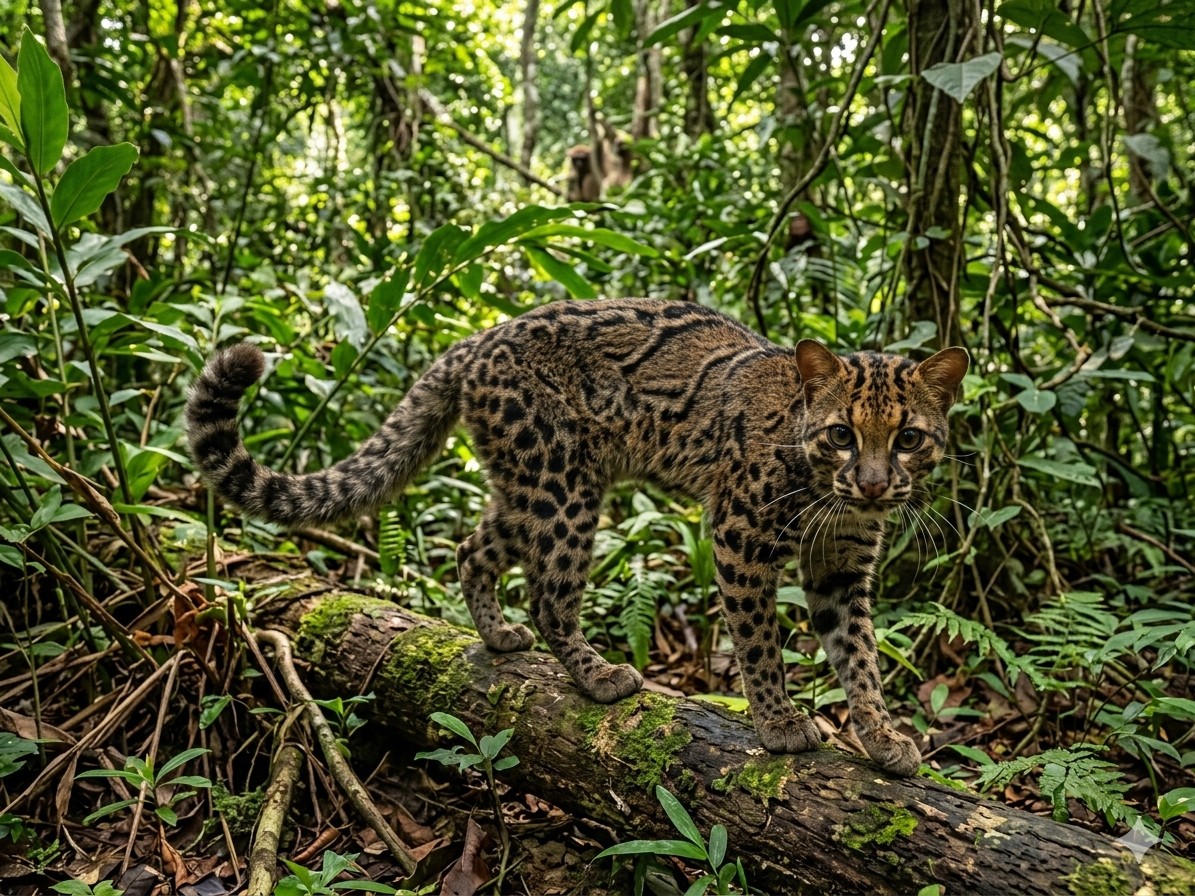
Marbled Cat in Bangladesh: A Hidden Forest Predator at Risk
The marbled cat is one of Bangladesh's most mysterious wild felines. Beautiful, elusive, and rarely documented, it survives in shrinking forest habitats where scientific knowledge remains dangerously limited.
Key Insights
- The marbled cat is one of the rarest and least understood wild cats in Bangladesh.
- It was first officially documented in the country in 2014.
- Dense evergreen forests in Sylhet, Chattogram, and the Chittagong Hill Tracts are its key habitat.
- Deforestation, fragmentation, roadkill, and poaching threaten its survival.
- A major conservation challenge is the lack of reliable scientific data.
A Species Shrouded in Mystery
The marbled cat (Pardofelis marmorata) is among the least understood wild cats in Bangladesh. Unlike larger and more visible predators, it has remained almost invisible in both public awareness and conservation planning. That invisibility is part of the problem. The species is not only rare, but also understudied, which makes it harder to protect before populations decline further.
In Bangladesh, confirmed records remain extremely limited. Since its first documentation in 2014, only a handful of sightings, camera-trap records, and mortality incidents have confirmed its presence. This means the marbled cat could be more widespread than currently known, or it could already be in serious decline. Right now, the country simply does not have enough data to say with confidence.
That is why the marbled cat represents more than a single rare animal. It symbolizes a wider conservation blind spot: species can disappear from landscapes long before science, policy, or the public fully notices.
Quick Facts
Local Names
Marbel Biral, Chopjukta Biral
Main Habitat
Dense evergreen and hill forests in eastern Bangladesh
Key Regions
Sylhet, Chattogram, and the Chittagong Hill Tracts
Bangladesh Status
Data Deficient
Global Status
Near Threatened
Why the Marbled Cat Matters
The marbled cat is strongly tied to healthy forest ecosystems. It depends on cover, prey availability, and intact habitat structure, which makes it a meaningful indicator of forest condition. If such a species can no longer survive in an area, that often signals wider ecological degradation affecting many other animals too.
2014
First documented record in Bangladesh after a rescued kitten was found in Srimangal.
2016
Camera traps recorded the species in the forests of Bandarban, confirming its presence in deeper hill forest habitat.
2024
A marbled cat was camera-trapped in Baraiyadhala National Park, adding an important modern record.
Recent years
A dead marbled cat was found on the Bayezid Link Road in Chattogram, highlighting the growing risk of road mortality.
Major Threats to the Marbled Cat
The threats facing the marbled cat are not always dramatic or visible, but they are serious. Forest loss, weak monitoring, and limited policy attention together create a quiet conservation crisis.
Habitat loss
The marbled cat depends on dense forest cover, but Bangladesh continues to lose tree cover and natural forest landscapes in the very regions where the species occurs.
Habitat fragmentation
Roads, settlements, and agricultural expansion are breaking large forests into isolated patches, reducing safe movement and long-term survival.
Poaching and snaring
Although not as heavily targeted as larger cats, the marbled cat still faces risks from illegal hunting, indiscriminate snaring, and wildlife trade pressure.
Road collisions
As more roads cut through hill forests, vehicle strikes are becoming a real danger, with at least one confirmed roadkill case in Chattogram.
Research gap
The lack of field data, monitoring, and species-specific conservation planning leaves the marbled cat vulnerable to decline without detection.
Habitat loss is the primary driver. The species is closely associated with intact forest, yet Bangladesh continues to lose tree cover in exactly the landscapes where the marbled cat is found. In the Chittagong Hill Tracts, forest decline, land-use change, and settlement expansion place continuous pressure on remaining habitat.
Another growing issue is fragmentation. Even where forest still exists, broken and isolated habitat patches make movement harder and expose rare species to greater risk from people, roads, and reduced ecological connectivity. The reported road mortality in Chattogram shows how infrastructure expansion can become a direct threat for elusive forest wildlife.
Perhaps the most overlooked threat is the research gap itself. Bangladesh currently lacks a strong research program for many data-deficient species, including the marbled cat. Without field surveys, population baselines, and habitat mapping, protection tends to remain generic and reactive rather than targeted and effective.
The Conservation Gap in Bangladesh
Although the marbled cat is legally protected, legal protection alone is not enough. Enforcement remains limited, field capacity is weak, and much of the species' likely habitat exists outside protected areas. That means the marbled cat may be surviving in landscapes where laws are harder to implement and habitat change happens quickly.
There is also a policy gap. Existing regional conservation efforts have focused more strongly on larger cats, leaving small and less visible felines without the same dedicated attention. Yet these species share the same forests, face the same habitat threats, and need the same urgency before their populations fall beyond recovery.
Why urgent action matters
A species that is rarely seen can easily be overlooked in policy, funding, and public awareness. But rarity does not reduce importance. It increases urgency.
If research is delayed for years, Bangladesh may reach the next Red List cycle still not knowing whether the marbled cat is stable, declining, or already in severe trouble.
What Should Happen Next
Conduct dedicated ecological surveys across Sylhet, Chattogram, and the Chittagong Hill Tracts.
Include the marbled cat in active regional conservation planning, not only larger cat species.
Strengthen anti-poaching patrols and snare removal in critical forest habitat.
Identify roadkill hotspots and introduce mitigation near high-risk forest roads.
Support Indigenous and community-led forest protection systems such as Village Common Forests.
Allocate funding for data-deficient species research before the next Red List update cycle.
Protecting the marbled cat will require more than symbolic protection. It needs real ecological surveys, habitat safeguarding, stronger enforcement, and inclusion in regional conservation strategies. It also needs public attention. Species that remain hidden are often the easiest to lose.
Explore More
Continue exploring the species, habitats, and conservation stories shaping Bangladesh's wildlife future.