Powerful Forest Predator
Indian Leopard in Bangladesh: A Powerful Predator Under Pressure
The Indian Leopard is one of Bangladesh's most iconic wild carnivores. Strong, adaptable, and elusive, it represents the resilience of the country's remaining forests while also highlighting the growing pressure placed on top predators by habitat loss and human expansion.
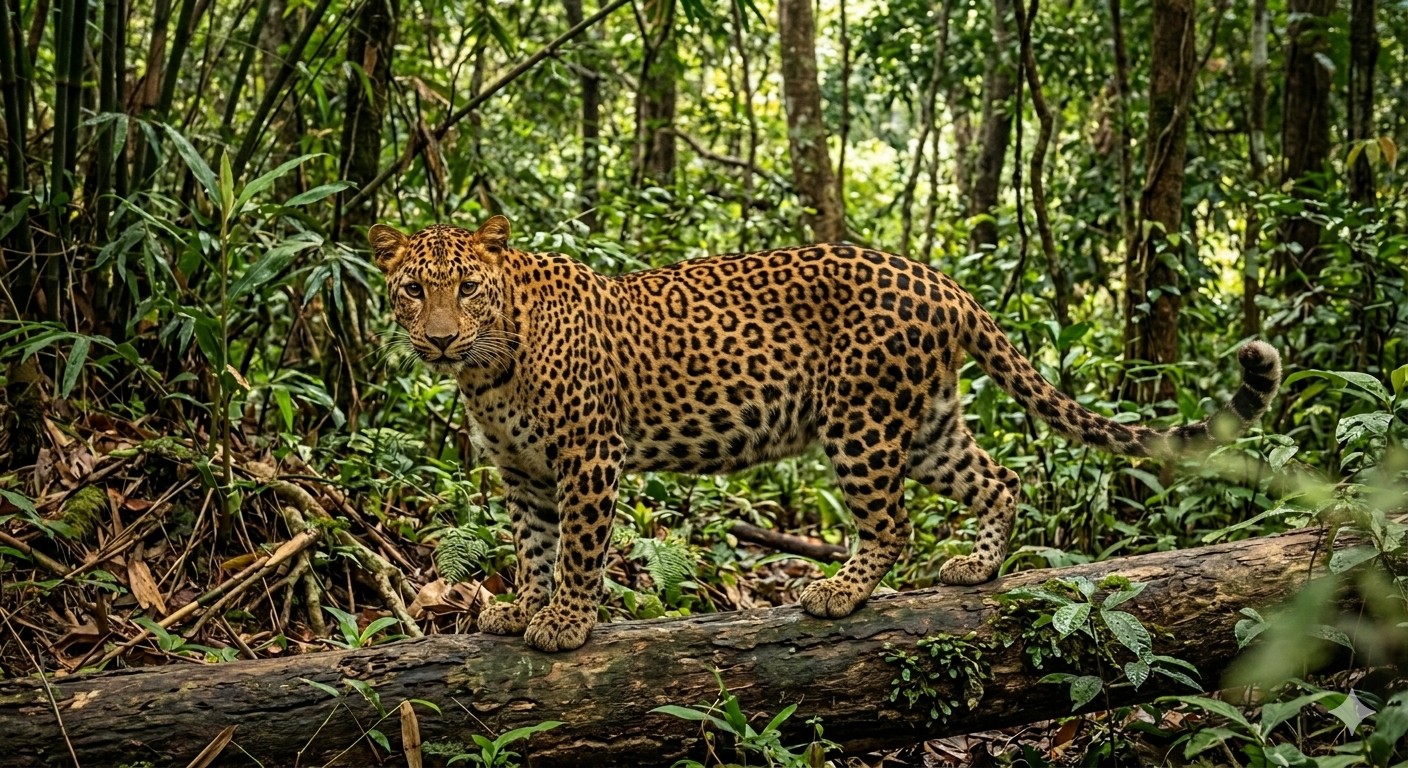
Key Insights
- The Indian Leopard is one of the most powerful and adaptable wild cats in Bangladesh.
- Recent camera-trap records confirm that leopards still survive in parts of the country.
- Habitat loss, fragmentation, and human conflict threaten long-term survival.
- As a top predator, the leopard plays an important role in ecological balance.
- Protecting leopards also protects forests, prey species, and wider biodiversity.
A Predator of Strength, Balance, and Survival
The Indian Leopard is one of the most important carnivores in South Asian ecosystems. In Bangladesh, it symbolizes both the richness of the country's remaining forests and the vulnerability of species that require space, cover, and prey to survive. Though more adaptable than some other large cats, the leopard still depends on stable habitat and low levels of disturbance.
Leopards are powerful and versatile hunters. Their presence contributes to ecological balance by helping regulate prey populations and maintaining the structure of food webs. When top predators disappear from a landscape, the effects are often felt across many other species and habitats.
In Bangladesh, protecting the Indian Leopard means conserving more than one species. It means defending entire forest landscapes that also support deer, monkeys, birds, reptiles, and countless smaller forms of life. The leopard stands near the top of that system, and its survival reflects the wider condition of the ecosystem below it.
Quick Facts
Common Name
Indian Leopard
Scientific Name
Panthera pardus fusca
Main Habitat
Forests, hill forests, and wild landscapes with cover
Ecological Role
Top predator helping maintain ecological balance
Main Challenge
Habitat pressure and increasing human conflict
Why the Indian Leopard Matters
The Indian Leopard matters because it holds an important place in the food chain. As a top predator, it influences the abundance and behavior of prey species, which in turn shapes vegetation, habitat use, and ecological interactions across the forest landscape.
Top predator
The Indian Leopard helps regulate prey populations and supports ecological balance in forest ecosystems.
Highly adaptable
Compared with some other big cats, leopards can survive in a wider range of habitats, though they still depend on cover and prey.
Forest strongholds
Bangladesh’s remaining eastern and hilly forest regions are among the most important landscapes for leopard survival.
Indicator of ecosystem health
The presence of leopards often signals that a landscape still supports enough habitat structure and wildlife to sustain top carnivores.
Present Sightings in Bangladesh
Leopard records in Bangladesh are rare, which is why every confirmed sighting carries major conservation value. Recent camera-trap photographs from the Chittagong Hill Tracts provided an important reminder that the species still persists in the country, even if in very small and fragile numbers.
Reports in 2025 described a leopard photographed in the Chittagong Hill Tracts and linked that confirmation to the Sangu-Matamuhuri Reserve Forest area. Some coverage described it as the first confirmed record in that forest in nearly ten years. Other conservation reporting has noted that leopard records in Bangladesh remain scattered, with additional concern around northern and northwestern border districts where conflict and survival pressures are also part of the story.
2025
Camera-trap confirmation in the Chittagong Hill Tracts
Camera traps photographed a leopard in the Chittagong Hill Tracts, giving conservationists an important modern confirmation that leopards still survive in Bangladesh’s southeastern forests.
2025
Sangu-Matamuhuri Reserve Forest record
Public reporting described the image as the first confirmed leopard sighting in the Sangu-Matamuhuri Reserve Forest in nearly a decade, highlighting the importance of this forest landscape.
Ongoing pattern
Records remain scattered and rare
Reviews and conservation reporting suggest leopard records in Bangladesh remain sparse, with occurrences linked to forested and border-adjacent landscapes rather than widespread stable populations.
Conservation signal
Sightings do not mean security
A modern sighting is encouraging, but it does not mean the species is safe. Rare records often underline how little habitat remains and how urgently those landscapes need protection.
These sightings matter because they show that Bangladesh still holds habitats capable of supporting large carnivores. But they also show how narrow that survival margin may be. A leopard appearing on camera after years without confirmation is not just exciting news — it is a warning that remaining forest strongholds must be protected before they shrink further.
In practical terms, present sightings should lead to more monitoring, more habitat protection, and stronger conflict prevention. When records are this rare, every confirmed presence should help guide conservation priorities on the ground.
Major Threats to the Indian Leopard
Although leopards are adaptable, adaptation has limits. In Bangladesh, the species faces mounting pressure from habitat change, shrinking wild space, and closer contact with people.
Habitat loss
Deforestation, land conversion, and degradation of forest ecosystems continue to reduce the space leopards need for movement, shelter, and hunting.
Habitat fragmentation
Roads, settlements, and expanding human activity break continuous habitat into smaller patches, increasing pressure on already vulnerable leopard populations.
Human-leopard conflict
As leopards lose habitat and move closer to settlements, conflict with people can increase, especially where livestock or fear-driven retaliation is involved.
Poaching and illegal killing
Leopards remain at risk from illegal hunting, trade, and direct persecution in areas where awareness and law enforcement are weak.
Declining prey base
A reduction in natural prey can push leopards into more difficult landscapes, increasing ecological stress and the likelihood of conflict.
Habitat loss is the biggest long-term threat. As forests are cleared, degraded, or converted for other uses, leopards lose essential cover and hunting ground. Even a species known for adaptability cannot thrive without enough wild space.
Fragmentation makes the problem worse. When forests are broken into smaller disconnected patches, movement becomes harder and encounters with people become more likely. This can increase conflict, retaliatory killing, and stress on already limited leopard populations.
The decline of natural prey also affects survival. If prey becomes scarce, leopards may move into riskier landscapes in search of food. That can deepen conflict and reduce the long-term stability of populations across fragmented habitats.
The Conservation Challenge in Bangladesh
The Indian Leopard faces a conservation challenge shared by many large carnivores: it needs broad, connected, functioning landscapes, but those landscapes are becoming smaller and more disturbed. Effective conservation therefore cannot focus only on individual animals. It must protect habitat systems at the landscape scale.
Long-term survival depends on forest protection, better ecological monitoring, reduced conflict, and stronger law enforcement. It also depends on recognizing that predators are not separate from ecosystems. They are part of what keeps those ecosystems healthy.
Why urgent action matters
When top predators decline, the damage is rarely isolated. It can ripple across prey populations, vegetation patterns, and the wider ecological balance of a landscape.
Protecting the Indian Leopard now means protecting the health, resilience, and biodiversity of Bangladesh's remaining wild forests.
What Should Happen Next
Protect remaining forest landscapes and prevent further habitat degradation.
Improve habitat connectivity between important leopard areas.
Strengthen anti-poaching enforcement and wildlife crime monitoring.
Reduce conflict through awareness, livestock protection, and rapid response systems.
Support long-term monitoring of leopard populations and prey abundance.
Integrate leopard conservation into broader landscape and forest management planning.
With stronger habitat protection, better monitoring, and practical conflict reduction, Bangladesh can improve the future of the Indian Leopard. Conserving this predator is ultimately about keeping forest ecosystems alive, connected, and capable of supporting wildlife for generations to come.
Explore More
Continue exploring the species, habitats, and conservation stories shaping Bangladesh's wildlife future.