Riverine Carnivore
Smooth-coated Otter in Bangladesh: Rivers, Wetlands, and Why It Matters
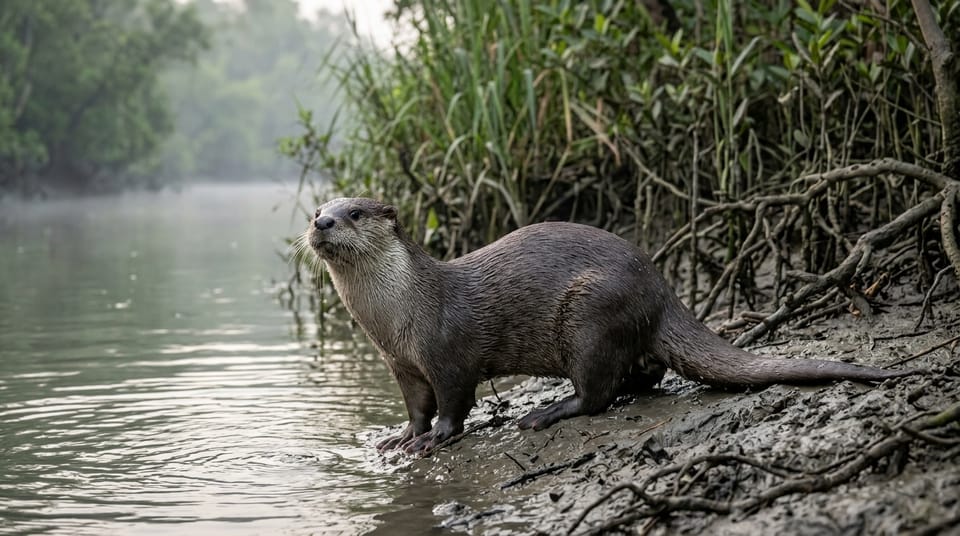
The Smooth-coated Otter (Lutrogale perspicillata) is one of Bangladesh's most charismatic aquatic mammals. Social, intelligent, and deeply tied to clean rivers and mangroves, its survival mirrors the future of the nation's freshwater ecosystems.
Key Insights
- The Smooth-coated Otter (Lutrogale perspicillata) is the largest otter species found across Bangladesh’s freshwater wetlands and mangrove waterways.
- It survives in fragmented populations across the Sundarbans, northeastern haor basins, and parts of major river deltas.
- As an apex freshwater predator, it maintains balanced fish communities and signals intact river and wetland health.
- Narail in southwestern Bangladesh preserves one of the world’s last documented traditions of cooperative otter-assisted fishing.
- Wetland drainage, river pollution, fishing net entanglement, and illegal wildlife trade are major threats to its survival.
A Social River Guardian Under Quiet Pressure
In a delta shaped by rivers, floodplains, and tidal creeks, the Smooth-coated Otter once thrived across much of Bangladesh. Built for water with webbed paws, a flattened tail for propulsion, and a sleek water-repellent coat, family groups coordinate hunts by herding schools of fish into shallow banks.
Today, however, intensifying river pollution, wetland conversion, destructive fishing practices, and bank disturbance have pushed wild populations into isolated pockets. Protecting the Smooth-coated Otter means protecting the ecological health of Bangladesh's rivers themselves.
Quick Facts
Common Name
Smooth-coated Otter
Scientific Name
Lutrogale perspicillata
Conservation Status
Vulnerable (IUCN Red List)
Primary Diet
Fish, crustaceans, frogs, and aquatic prey
Bangladesh Strongholds
Sundarbans mangrove waterways, haor wetlands, and southern rivers
Why the Smooth-coated Otter Matters
Healthy rivers need top predators just as much as forests do. By preying selectively on slower, weaker, or overabundant fish, Smooth-coated Otters keep aquatic food webs resilient and alert researchers early when wetland contamination or habitat loss sets in.
Social hunter
Unlike many solitary carnivores, Smooth-coated Otters live and hunt cooperatively in close family groups.
Wetland indicator
Thriving otter groups indicate clean water, abundant native fish, and undisturbed vegetated riverbanks.
Mangrove & river specialist
Adaptable across tidal creeks of the Sundarbans as well as freshwater rivers, beels, and floodplain haors.
Cultural coexistence
Generations of traditional fisherfolk in southern Bangladesh have worked alongside trained otters during river fishing.
Bangladesh’s Wetlands and Cultural Heritage
Bangladesh holds both critical wild habitats in the Sundarbans and northeastern haors and a uniquely documented human–otter bond in Narail, where traditional fisherfolk have worked alongside trained otters for generations to guide fish toward cast nets. Sustaining both wild habitats and community stewardship is vital for the species’ future.
Stronghold habitat
Sundarbans & Haor Basins
Tidal mangrove creeks in the Sundarbans and seasonal wetlands in Sylhet and Sunamganj remain vital refuges for remnant groups.
Cultural heritage
Narail Otter Fishing Tradition
Fisher families along the Chitra and Bhairab rivers maintain a centuries-old partnership with captive-bred Smooth-coated Otters.
Population reality
Increasingly Fragmented
Once widespread across the Bengal delta, wild groups now face sharp contraction as riverbanks are cleared and wetlands shrink.
Conservation focus
Protecting Riparian Buffers
Securing undisturbed bank vegetation, unpolluted tributaries, and safe fish passages is essential for long-term recovery.
Ecological Role in Rivers and Mangroves
Smooth-coated Otters bridge freshwater channels, flooded grasslands, and estuarine creeks, functioning as keystone indicators for water quality and wetland connectivity.
Top freshwater aquatic predator
Feeding predominantly on fish, crustaceans, and amphibians, Smooth-coated Otters regulate prey populations and prevent single-species dominance in wetlands.
Nutrient cycling across land and water
Moving constantly between river channels and holts along vegetated banks, otters transfer nutrients across aquatic and terrestrial boundaries.
Sentinel of river pollution
Because otters sit near the top of aquatic food webs, toxic agricultural runoff, heavy metals, and microplastics accumulate rapidly in their tissues.
Umbrella species for wetlands
Measures that conserve riverbanks and healthy fish stocks for Smooth-coated Otters simultaneously protect Fishing Cats, freshwater turtles, and riverine birds.
Major Threats
Because otters rely simultaneously on clean water, healthy fish stocks, and undisturbed riverbanks, cumulative wetland pressures can rapidly eliminate local populations.
Wetland & riverbank loss
Encroachment, sand mining, damming, and bank clearing destroy dense reeds and root cavities needed for denning and raising pups.
Water pollution & siltation
Industrial discharge, agrochemicals, and untreated sewage degrade water quality and collapse native fish populations.
Fishing gear & conflict
Monofilament gill nets, aquaculture pond barriers, and retaliatory killing during perceived fish loss cause direct mortality.
Illegal trade & persecution
Otters face threats from poaching for pelts and live capture for illegal wildlife markets across South and Southeast Asia.
What Needs to Happen Next
Protect riverbank vegetation, mangrove creeks, and haor sanctuaries where Smooth-coated Otters den and forage.
Monitor remnant wild populations using non-invasive spraint surveys and riverbank camera trapping across Bangladesh.
Reduce accidental drowning by regulating destructive fine-mesh fishing nets in critical wetland corridors.
Support community-based wetland stewardship and sustainable livelihoods for traditional fisherfolk communities.
Strengthen enforcement against illegal wildlife capture and domestic or cross-border otter trafficking.