Bears · Bangladesh Field Dossier
Asiatic Black Bear
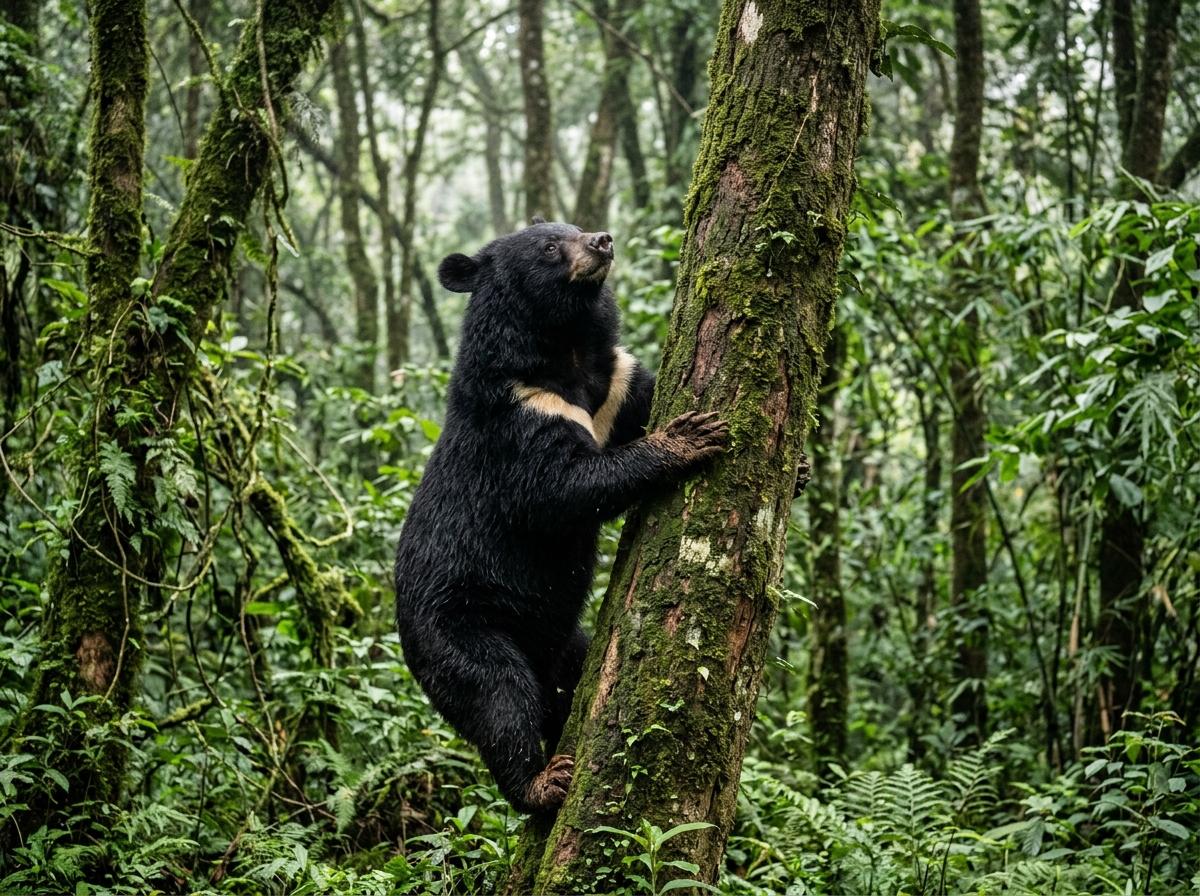
Recognized by its glossy black coat, prominent round ears, and bold cream V-shaped chest crescent, this agile tree-climbing bear persists in eastern hill reserves.
- Global IUCN Red List
- Vulnerable (VU)
- IUCN Bangladesh (2015)
- Critically Endangered (CR)
- Ecological Guild & Activity
- Omnivore & Frugivore · Diurnal & Nocturnal (Fruit-Season Shifting)
- Typical Body Mass & Population
- 60–150 kg · Critically Small (<100–200 estimated nationally)
Habitat & Population Trend
Habitat: Subtropical Mixed Evergreen Hill Forests
Trend: Decreasing
Primary Conservation Threats
Poaching for gall bladder/paws, cub capture, hill deforestation & conflict
Ecological Role & Significance
Large arboreal frugivore and forest-health barometer in eastern hills.
Field Evidence & Conservation Assessment in Bangladesh
Also known as the Moon Bear, Ursus thibetanus is the larger of Bangladesh's two surviving bear species. Field reports from Bandarban, Rangamati, and Sylhet tea-forest borders document human-bear encounters during mast fruiting and maize harvests alongside intense illegal hunting pressure.
Primary References & Checklists
- · IUCN Bangladesh (2015). Red List of Bangladesh, Volume 2: Mammals.
- · Chittagong Hill Tracts Bear Conservation & Trade Assessments.
Chittagong Hill Tracts & Northeast Sylhet Hills
Documented landscapes, reserve forests, and habitats linked to Asiatic Black Bear (Ursus thibetanus):
- Sangu-Matamuhuri Reserve Forest
- Kassalong Reserve Forest
- Bandarban & Sylhet Transboundary Hills
Featured Research Brief
Illegal Bear Parts & Live Cub Trafficking in Bangladesh
Examine enforcement challenges and trafficking routes affecting bears and hill forest mammals.
Read full article →Asiatic Black Bear Conservation FAQ (Bangladesh)
How is an Asiatic Black Bear distinguished from a Sun Bear in Bangladesh?
The Asiatic Black Bear is larger (up to 150 kg) with shaggy shoulder hair, large rounded ears, and a sharp white V-shaped crescent, whereas the Sun Bear is sleek, half the size, with tiny ears and a U-shaped cream/orange chest bib.
Where do Asiatic Black Bears survive in Bangladesh?
Confirmed populations inhabit rugged hill forests across Bandarban, Rangamati, Khagrachari, and scattered transboundary Sylhet hills.
Related Family Ursidae in Bangladesh