Bears · Bangladesh Field Dossier
Sun Bear
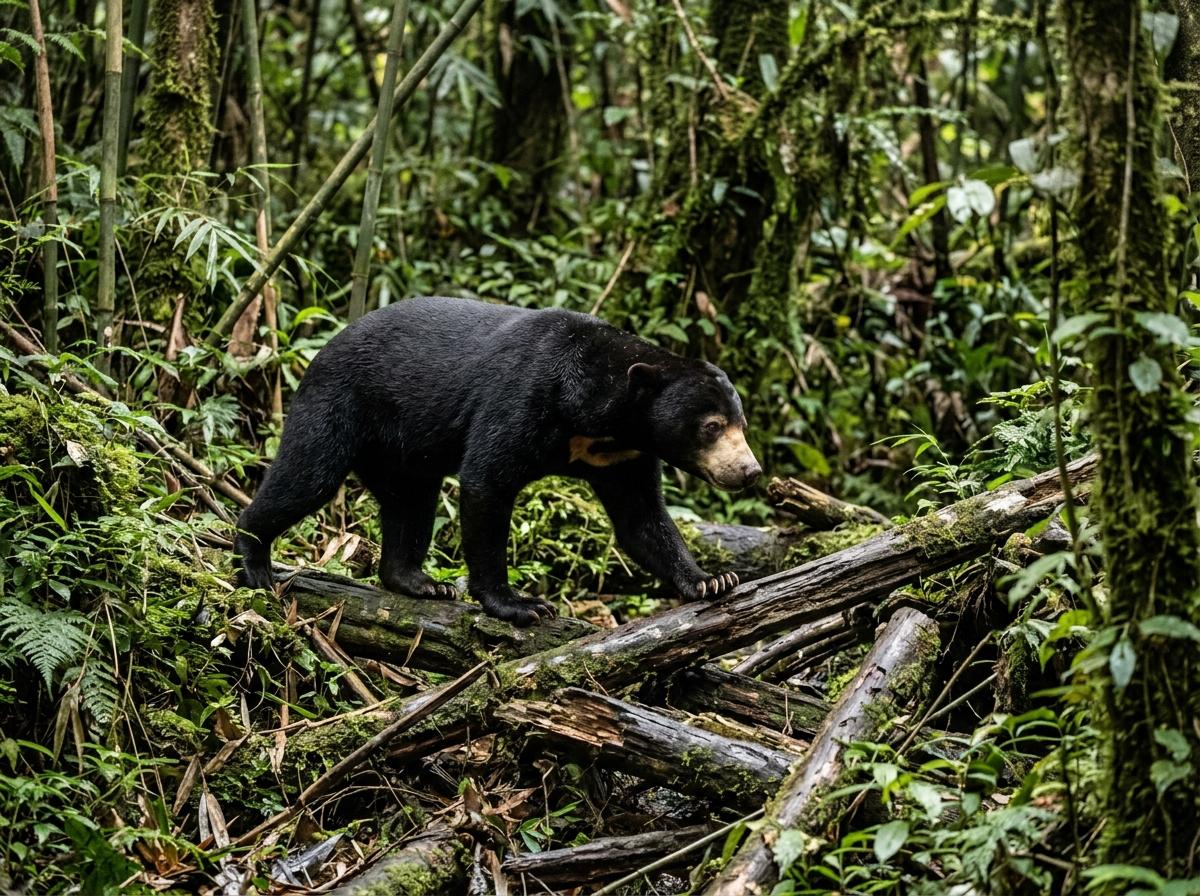
The world's smallest bear species, featuring sleek short black fur, pale muzzle, long curved climbing claws, and a golden-cream U-shaped chest patch.
- Global IUCN Red List
- Vulnerable (VU)
- IUCN Bangladesh (2015)
- Critically Endangered (CR)
- Ecological Guild & Activity
- Omnivore (Stingless Bees, Honey, Termites & Fruit) · Diurnal & Nocturnal
- Typical Body Mass & Population
- 25–65 kg · Extremely Rare (Critically Endangered Nationally)
Habitat & Population Trend
Habitat: Dense Tropical Evergreen & Bamboo-Rich Hill Forests
Trend: Decreasing
Primary Conservation Threats
Rapid forest fragmentation, illegal cub trade & subsistence hunting
Ecological Role & Significance
World's smallest bear at the northwestern edge of its global geographic distribution.
Field Evidence & Conservation Assessment in Bangladesh
Bangladesh marks the extreme northwestern global range boundary for Helarctos malayanus. Confirmed by camera traps and rescued cubs from the Chittagong Hill Tracts, Sun Bears rely on old-growth hardwood trees rich in stingless-bee nests and tropical figs—habitats rapidly shrinking along steep hillside clearings.
Primary References & Checklists
- · IUCN Bangladesh (2015). Red List of Bangladesh, Volume 2: Mammals.
- · Creative Conservation Alliance — Sangu-Matamuhuri Camera-Trap Confirmation.
Chittagong Hill Tracts (Southern & Eastern Border Reserves)
Documented landscapes, reserve forests, and habitats linked to Sun Bear (Helarctos malayanus):
- Sangu-Matamuhuri Reserve Forest
- Kassalong Reserve Forest
- Remote Bandarban Hill Tracts
Sun Bear Conservation FAQ (Bangladesh)
Are Sun Bears native to Bangladesh?
Yes. Eastern hill forests of the Chittagong Hill Tracts represent the northwestern edge of the Sun Bear's global distribution, confirmed by camera-trapping and rescue records.
Why is the Sun Bear Critically Endangered in Bangladesh?
With very few individuals surviving in tiny eastern hill tracts, logging of old fruiting trees and illegal hunting for cubs and bile place it at immediate national risk.
Related Family Ursidae in Bangladesh