Mustelids · Bangladesh Field Dossier
Eurasian Otter
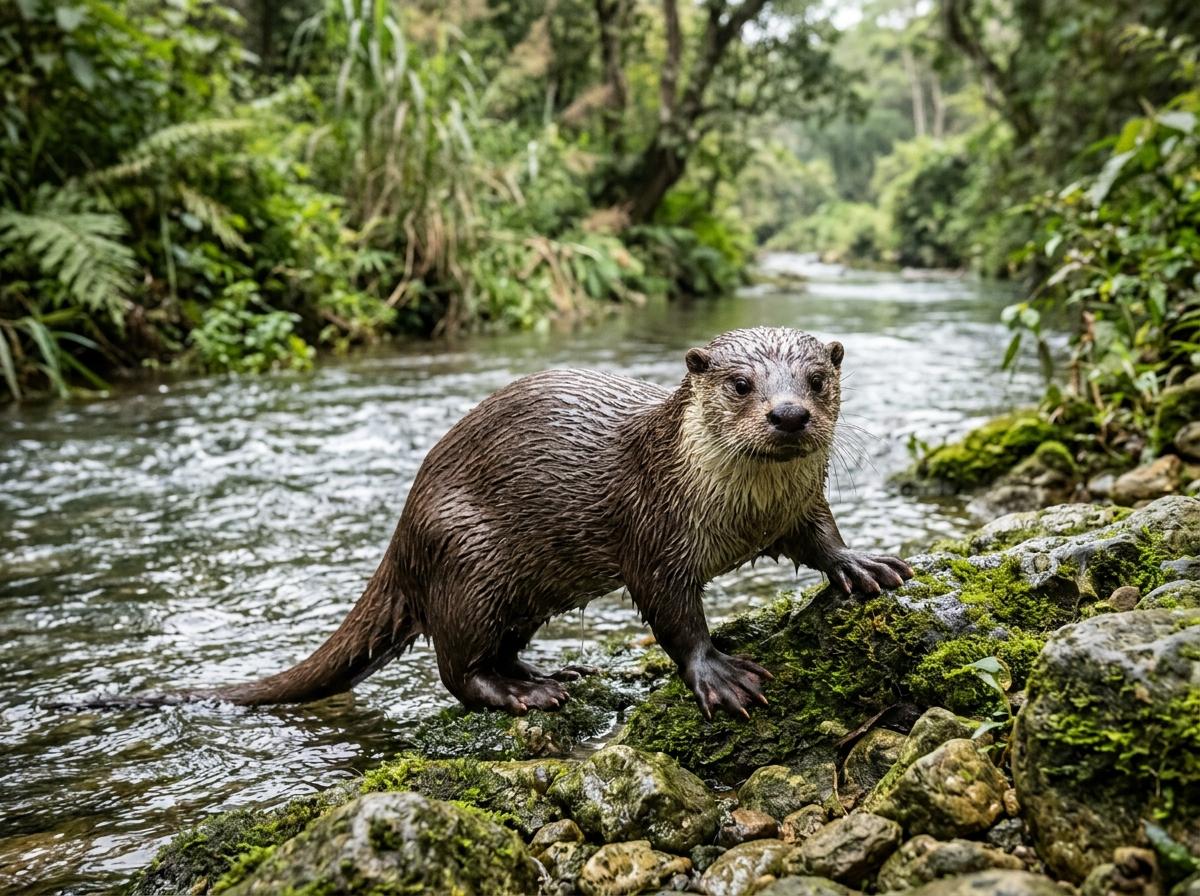
A largely solitary, nocturnal river otter with a conical rounded tail and zig-zag nose pad—now among Bangladesh's most imperiled freshwater mammals.
- Global IUCN Red List
- Near Threatened (NT)
- IUCN Bangladesh (2015)
- Critically Endangered (CR)
- Ecological Guild & Activity
- Solitary Freshwater Piscivore · Nocturnal & Crepuscular
- Typical Body Mass & Population
- 5–12 kg · Extremely Rare (Critically Endangered Nationally)
Habitat & Population Trend
Habitat: Clear Hill Rivers, Riparian Reeds & Freshwater Marshes
Trend: Decreasing Sharply
Primary Conservation Threats
River siltation, wetland drainage, fish-pond conflict & gillnets
Ecological Role & Significance
Critically Endangered benchmark of unpolluted freshwater rivers in Bangladesh.
Field Evidence & Conservation Assessment in Bangladesh
Despite being Near Threatened across Eurasia, Lutra lutra plunged to Critically Endangered (CR) in the 2015 Red List of Bangladesh. Severe wetland degradation, agrochemical contamination, and confusion with Smooth-coated Otters make urgent field DNA/spraint monitoring essential to verify remaining pockets.
Primary References & Checklists
- · IUCN Bangladesh (2015). Red List of Bangladesh, Volume 2: Mammals.
- · Freshwater Otter Status Reviews of the Sylhet Basin.
Northeastern Wetlands (Sylhet Haors) & Eastern Hill Rivers
Documented landscapes, reserve forests, and habitats linked to Eurasian Otter (Lutra lutra):
- Tanguar & Hakaluki Haor Systems
- Sylhet & Chittagong Hill Rivers
Eurasian Otter Conservation FAQ (Bangladesh)
How rare is the Eurasian Otter in Bangladesh today?
IUCN Bangladesh (2015) assesses it as Critically Endangered (CR), with very few confirmed modern records compared to historical presence across northern and eastern rivers.
How can biologists distinguish a Eurasian Otter from a Smooth-coated Otter?
Eurasian Otters have a rounded (not flattened) tail, shaggier brown coat, a W-shaped nose leather border, and generally forage solitarily at night.
Related Family Mustelidae in Bangladesh