Felines · Bangladesh Field Dossier
Leopard Cat
A slender wild cat roughly the size of a domestic tabby, bearing distinct dark spots and two vertical facial stripes above its eyes.
- Global IUCN Red List
- Least Concern (LC)
- IUCN Bangladesh (2015)
- Near Threatened (NT)
- Ecological Guild & Activity
- Mesocarnivore (Rodent Specialist) · Nocturnal & Crepuscular
- Typical Body Mass & Population
- 2.5–5.5 kg · Widespread but declining locally
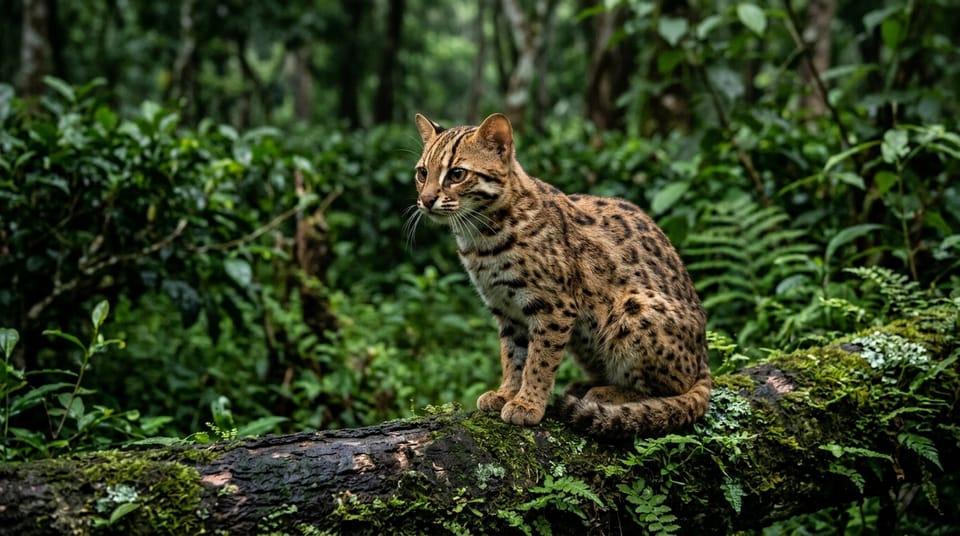
Habitat & Population Trend
Habitat: Forests, Tea-Estate Scrub, Mangroves & Rural Edges
Trend: Decreasing
Primary Conservation Threats
Retaliatory killing, road mortality, feral dog predation & snaring
Ecological Role & Significance
Most abundant wild felid suppressing agricultural rodent pests across Bangladesh.
Field Evidence & Conservation Assessment in Bangladesh
While globally Least Concern, IUCN Bangladesh (2015) elevated Prionailurus bengalensis to Near Threatened because rural persecution—often fueled by villagers mistaking cubs or adults for Bengal Tiger or Leopard offspring—continues alongside high roadkill rates along forest highways bisecting Moulvibazar and Chattogram.
Primary References & Checklists
- · IUCN Bangladesh (2015). Red List of Bangladesh, Volume 2: Mammals.
- · Northeast Bangladesh Tea-Estate Buffer & Roadkill Surveys.
Sundarbans, Sylhet, Chattogram & Homestead Groves
Documented landscapes, reserve forests, and habitats linked to Leopard Cat (Prionailurus bengalensis):
- Lawachara National Park
- Rema-Kalenga Wildlife Sanctuary
- Sundarbans Mangrove Reserve
Featured Research Brief
Major Threats to Small Wild Cats & Wildlife in Bangladesh
Explore how habitat fragmentation, snaring, and retaliatory persecution pressure Bangladesh's small carnivores.
Read full article →Leopard Cat Conservation FAQ (Bangladesh)
How large is a Leopard Cat compared to a domestic cat?
An adult Leopard Cat weighs 2.5 to 5.5 kg—similar to a slender domestic cat, though with longer legs, rounded ears, and spotted flanks.
Why is the Leopard Cat beneficial for farmers in Bangladesh?
Rats, mice, and bandicoots form the core of its diet, delivering natural pest suppression around paddy fields and tea gardens.
Related Family Felidae in Bangladesh