Civets & Mongooses · Bangladesh Field Dossier
Small Indian Mongoose
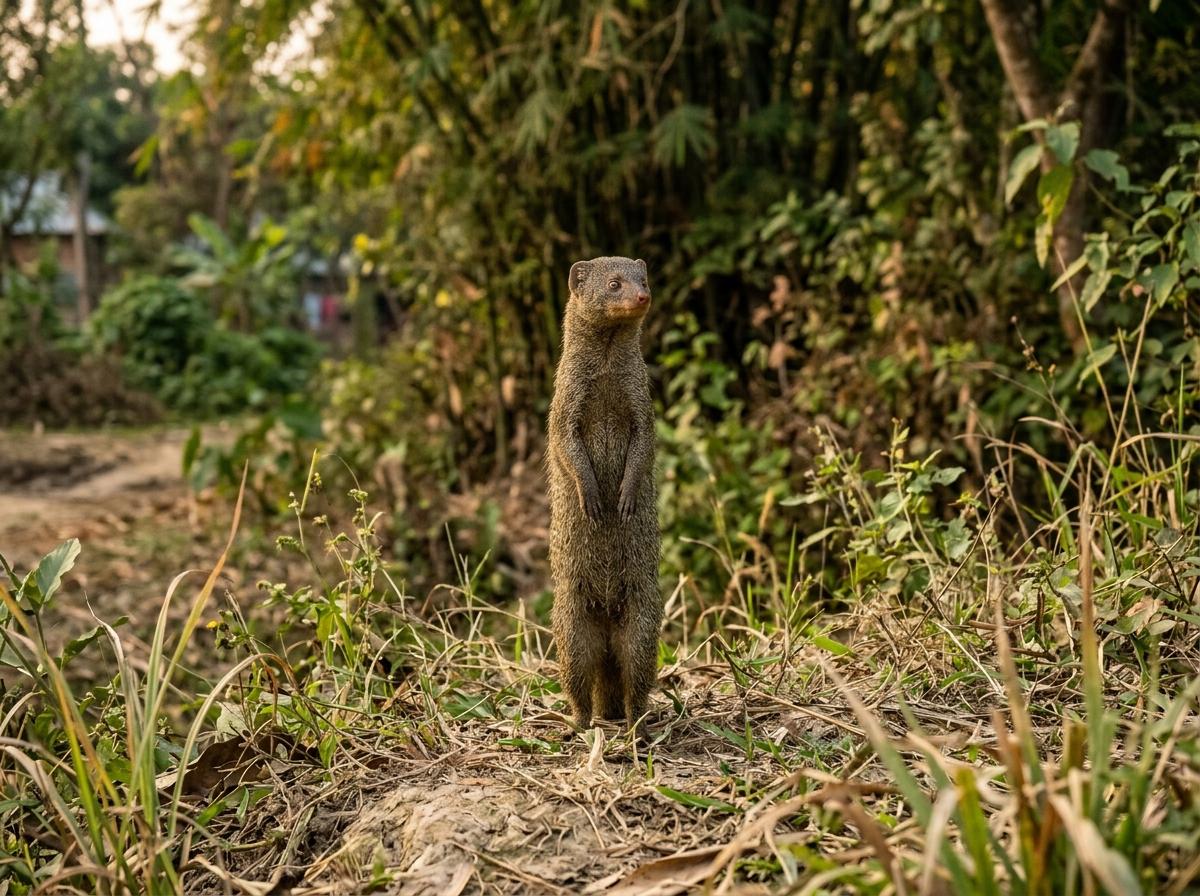
A nimble, slender diurnal carnivore with finely speckled golden-olive fur that patrols field embankments and homestead gardens across Bangladesh.
- Global IUCN Red List
- Least Concern (LC)
- IUCN Bangladesh (2015)
- Least Concern (LC)
- Ecological Guild & Activity
- Diurnal Insectivore & Small-Vertebrate Predator · Strictly Diurnal
- Typical Body Mass & Population
- 0.4–0.9 kg · Common Countrywide
Habitat & Population Trend
Habitat: Scrub, Homestead Hedges, Agricultural Bunds & Open Forest Edges
Trend: Stable
Primary Conservation Threats
Road traffic, pesticides & domestic dog attacks
Ecological Role & Significance
Natural daytime controller of agricultural beetles, locusts, rats, and venomous snakes.
Field Evidence & Conservation Assessment in Bangladesh
Taxonomically reassigned from Herpestes auropunctatus to Urva auropunctata, this is the smallest and most familiar mongoose across Bangladesh. While Least Concern natively in South Asia, field studies monitor how rodenticide use in paddy fields creates secondary poisoning risks.
Primary References & Checklists
- · IUCN Bangladesh (2015). Red List of Bangladesh, Volume 2: Mammals.
- · Patou et al. — Molecular Phylogeny of Asian Herpestidae (Urva).
Countrywide (Rural Villages, Parks, Riverbanks & Towns)
Documented landscapes, reserve forests, and habitats linked to Small Indian Mongoose (Urva auropunctata):
- Bhawal & Madhupur National Parks
- Botanical Gardens & Semi-Urban Green Corridors
- All Floodplain Districts
Small Indian Mongoose Conservation FAQ (Bangladesh)
What is the ecological benefit of Small Indian Mongooses in villages?
They hunt agricultural pests including rats, centipedes, grasshoppers, and young snakes during daylight hours.
How is it told apart from the Indian Grey Mongoose?
The Small Indian Mongoose is noticeably smaller, slimmer, has warmer brownish-olive flecking, and has a tail shorter than its head-and-body length.
Related Family Herpestidae in Bangladesh