Civets & Mongooses · Bangladesh Field Dossier
Small Indian Civet
A compact, sleek terrestrial civet lacking a dorsal crest, recognizable by rows of dark spots along its flanks and a 7-to-9 ringed tail.
- Global IUCN Red List
- Least Concern (LC)
- IUCN Bangladesh (2015)
- Near Threatened (NT)
- Ecological Guild & Activity
- Terrestrial Insectivore & Omnivore · Nocturnal
- Typical Body Mass & Population
- 2–4 kg · Moderate but Declining
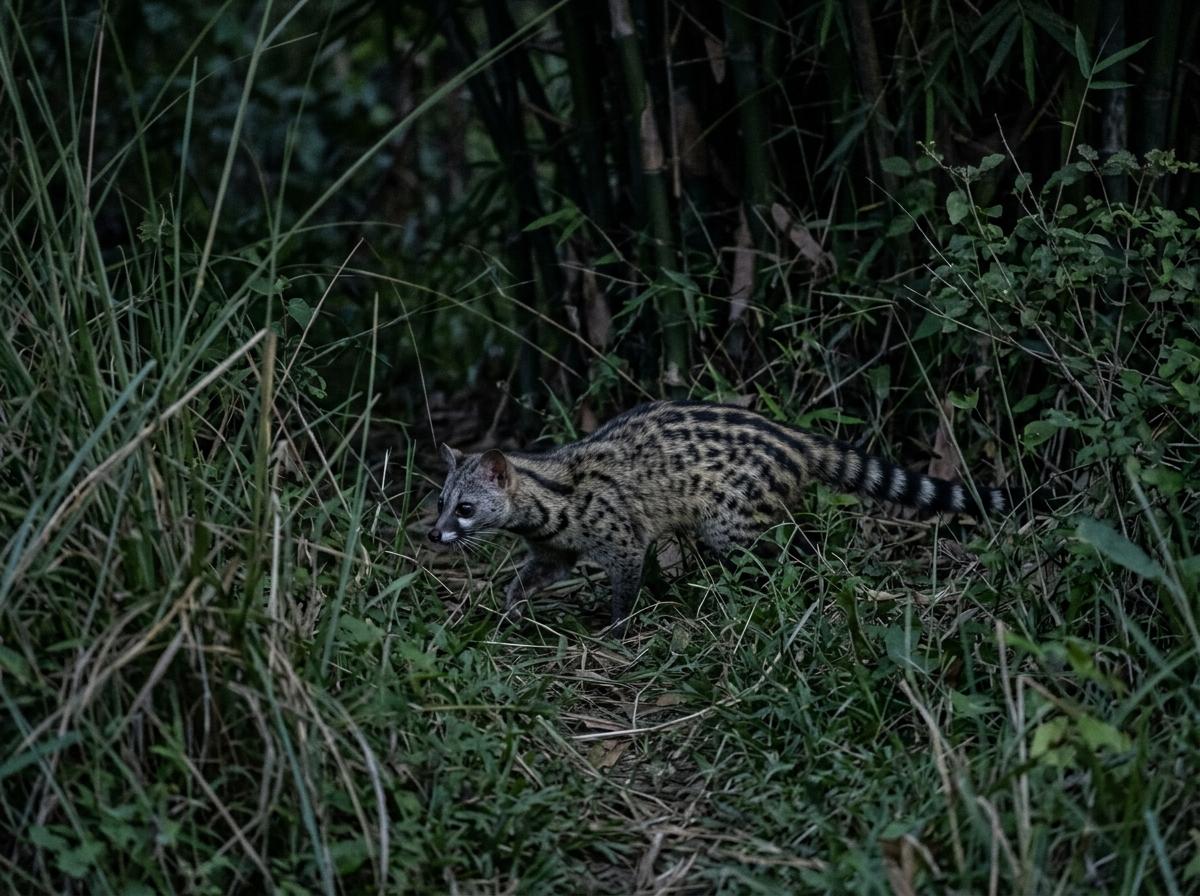
Habitat & Population Trend
Habitat: Long Grass, Bamboo Thickets, Sal Forests & Orchard Margins
Trend: Decreasing
Primary Conservation Threats
Scrubland loss, road mortality & persecution in villages
Ecological Role & Significance
Crucial nocturnal insect and rodent regulator around agricultural lands.
Field Evidence & Conservation Assessment in Bangladesh
Unlike the arboreal Asian Palm Civet that nests in village rafters and palms, Viverricula indica shelters in ground burrows, culverts, and thick bamboo clumps. IUCN Bangladesh (2015) assigns Near Threatened status due to persistent trapping and habitat degradation across agro-ecosystems.
Primary References & Checklists
- · IUCN Bangladesh (2015). Red List of Bangladesh, Volume 2: Mammals.
- · Biodiversity Surveys of Madhupur & Barind Village Woodlands.
Widespread in Grasslands, Village Bamboo Groves & Scrub
Documented landscapes, reserve forests, and habitats linked to Small Indian Civet (Viverricula indica):
- Bhawal National Park
- Madhupur National Park
- Lawachara & Rural Village Groves
Small Indian Civet Conservation FAQ (Bangladesh)
How is a Small Indian Civet different from a Large Indian Civet?
The Small Indian Civet is much smaller (2–4 kg), lacks the erected black ridge of hair down its back, has faint neck bands rather than heavy white-and-black collars, and sports clean black-and-white tail rings to the tip.
Why do Small Indian Civets enter gardens at night?
They forage strictly at night for rats, beetles, grasshoppers, snails, and fallen seasonal berries.
Related Family Viverridae in Bangladesh